Oktober 2026
17Okt(Okt 17)17:0013Dez(Dez 13)17:00
TRANSHUMAN N°5
Dysis
Astali/Peirce, Birte Bosse, Simon Faithfull, Olga Fedorova, Stella Geppert, Bastian Hoffmann, Virginie Ittah, Delia Jürgens, Felix Kiessling, Frederik Marks, Aline Schwörer, Geerten Verheus
curated by Stephan Klee
Vernissage
Saturday 17 October, 5 pm
Open until 8 pm
free admission)
Exhibition dates
18 Oct – 13 Dec 2026
Tue – Sun 11 am – 5 pm
Venue
Old Town Hall, Göttingen (1st floor)
Markt 9
37073 Göttingen
Admission
€3.00 / €1.50 (concession)
Free for visitors under 18
Free with the Kultur-Ticket
Free admission to Vernissages and Finissages
INTRODUCTION
“The end of the world has already occurred. We can be uncannily precise about the date on which the world ended. Convenience is not readily associated with historiography, nor indeed with geological time. But in this case, it is uncannily clear. It was April 1784, when James Watt patented the steam engine, an act that commenced the depositing of carbon in Earth’s crust—namely, the inception of humanity as a geophysical force on a planetary scale.”*
Dysis – Δύσις is an Ancient Greek word meaning, amongst other things, ‘the setting of a celestial body’, ‘the west’, ‘twilight’, ‘setting’ and ‘hiding place’. In Greek mythology, Dysis is also the patron goddess of sunset, the twilight phase marking the transition from day to night, which is also seen as a moment of reflection and transformation. The final group exhibition of 2026, bearing this title, juxtaposes works relating to the annual theme ‘TRANSHUMAN’ in the 400-square-metre exhibition spaces of the Old Town Hall in Göttingen. To this end, it brings together internationally recognised artists with significant new discoveries, placing the respective works in new, often illuminating contexts. The whole endeavour also represents new ground in curatorial practice.
For Dysis, the scenario of an abandoned future following our current civilisation is deliberately staged: only scattered sculptures and objects in the medieval gallery spaces offer a glimpse of past human activity, whilst deformed, functionless objects still bear witness to our current advanced civilisation. Added to this are film scenes of dilapidated architecture and dysfunctional means of transport. Thus, the works on display form a spatial network of artistic testimonies and traces of a former presence, of past activity. As if at a crime scene, viewers can grasp the aftermath of something that once was, without being able to fully unravel what actually happened. Simon Faithful displays the flooded holiday resort of an oil industry engineer; Bastian Hoffmann contributes a Porsche engine that has melted onto the floor; Stella Geppert freezes the clay-stirred traces of a group of people at work; Birte Bosse exhibits fragments of broken-out concrete reinforcement; and Astali/Peirce place an already mineralised T-shirt on display – to name but a few examples.
All the works on display are characterised by a sense of final enigma; they evoke thoughts and feelings without ever being able to deliver a clear conclusion or a clear reason for their erratic presence. In this state of tension between intuition and denial, they remain fixed in space and condition. In doing so, they allude, amongst other things, to the philosophical complex of speculative realism (or the related field of object-oriented ontology), which asserts the following: things in themselves possess an autonomous realm that eludes definitive human perception or scientific measurability. Consequently, there must be a substantial part of reality that lies outside our consciousness. This, in turn, means that things in the world actually behave autonomously and are not organised in an anthropocentric manner; they are, as it were, causally arranged around human perception and research. Timothy Morton expands this understanding of the world with what he calls ‘hyper-objects’. These are far-reaching processes and developments which last so long, or are so complex, that they elude both the human imagination and complete scientific analysis, yet are constantly transforming our planet. For him, the disintegration of the world brought about by the expanding, technological and mechanised transformation of global resources into energy, products, computer processes and services is an example of a hyperobject.
Furthermore, the exhibition’s installations often confront visitors, almost casually, with the question: “Is this the art on display, or was it already there before?” This gives rise to an unusual interplay between everyday life and high culture: a near future that has already passed – or rather, the possibility of our era’s past – has arrived in the reality of our present. Furthermore, there are individual ‘creatures’ from a vibrant, posthuman future, whose activities are currently taking over the fallow terrain of this exhibition. Examples include Virginie Ittah’s wax creature or Aline Schwörer’s new species.
All in all, this paints the following picture for the near future: the era of transhumanism has failed and is already drawing towards its final end, whilst the new era of posthumanism is already on the horizon. The exhibition thus presents a phase of transition, the coexistence of two eras. A liminal state is created – a staged liminality in the chronology of time. For visitors, questions arise such as: ‘Are we already at the twilight of an era, and what are its relics?’ – ‘How would we position ourselves in this twilight of the West?’ and: ‘What future might await us on the dawn of change?’ In this sense, this concluding exhibition in 2026 also serves as a kind of bridge to the coming exhibition year, 2027: >POSTHUMAN.
* in: Timothy Morton in “Hyperobjects – Philosophy and Ecology After the End of the World”, 2013, p. 7
PROGRAMME
Sat 17 Oct from 5 pm
Vernissage
Welcome speeches and introduction to the exhibition
The artists and the curator will be in attendance
Open until 8 pm
(Free admission)
Sun 1 Nov / Sun 9 Nov, both at 3 pm
Sunday tour
with Joos Ziegler and Stephan Klee respectively
Sun 7 Nov 2026 at 2 pm
The Long Afternoon of Art
with a guided tour and panel discussion
Open until 7 pm
(Free admission)
Sun 13 Dec 2026 at 3 pm
Finissage
with a guided tour by Stephan Klee
and closure
Open until 5 pm
(Free admission)
Eventimages:
Simon Faithfull Reenactment for a Future Scenario no. 2: Cape Romano, HD video, 6min loop, 2019
Courtesy of the artist
-

- Stella Geppert “Snow Leopard Track”, 2026

-
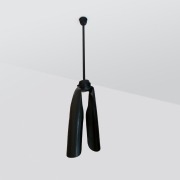
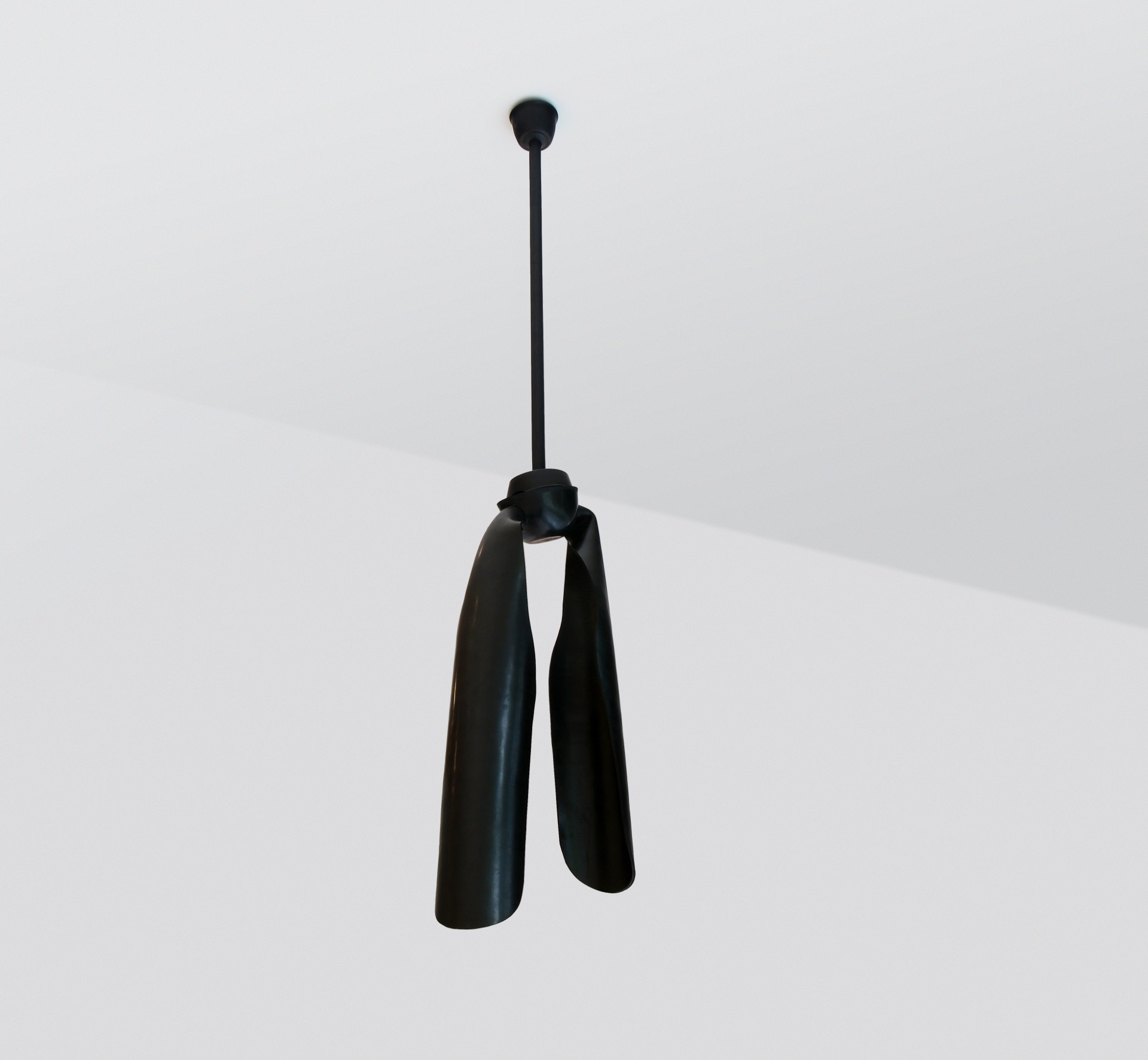
- Geerten Verheus “Kanikule” (Dog Day Nr. 12), 2025
-
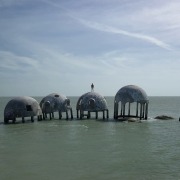
- Simon Faithfull: “Reenactment for a Future Scenario no.2: Cape Romano” (still), 2019

-

- Astali/Peirce “Monobloc” 2020

-
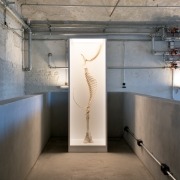
- Frederik Marks “The Knee of Another”, 2023

-

- Bastian Hoffman “Flatsix”, 2019

-

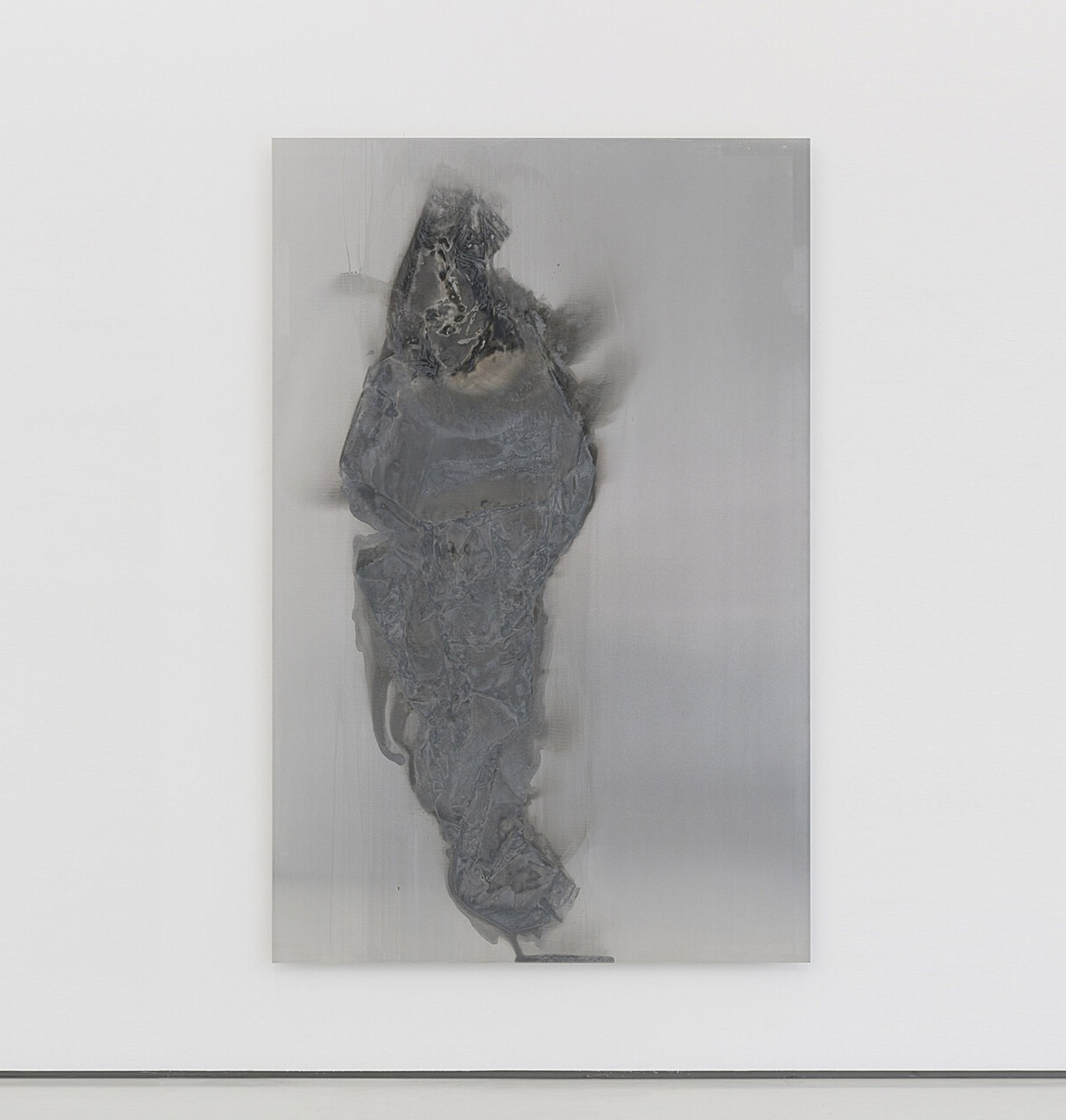
- Felix Kiessling “Arbeit”, 2025
-

- Aline Schwörer “Shells of unwritten times”, 2022, photo@ Silke Briehl

-

- Virginie Ittah “Anaïs”, 2025

THE ANNUAL PROGRAMME
TRANSHUMAN (2026)
>POSTHUMAN (2027)
The Kunstverein Göttingen continues to follow the proven two-year biennial programme rhythm in order to enable the most in-depth examination possible of the programme’s overarching themes. After TERRA DIASPORA (2024–2025) explored contemporary phenomena, our current programme looks to the near and distant future.
The two-year programme TRANSHUMAN >POSTHUMAN (2026 > 2027) takes a critical look at the global transformation anticipated by some schools of thought: the transition from the anthropocentric humans of our time to the technically optimised transhumans of the near future and, even further into the future of our species, to posthumans. In short: the development of humanity from modern humanism to transhumanism to posthumanism.
The basic theme for the first year is TRANSHUMAN (2026) and includes four solo exhibitions and one group exhibition, bringing together artistic approaches and works to form a collection of perspectives and aspects of transhumanism. The formal and thematic basis of all exhibitions is the artistic exploration of the acceleration of technological development and capitalist growth, and the desired biotechnological optimisation of the human body and mind. The resulting social upheavals are already taking place in many ways in our present, with drastic consequences for coexistence within the span of a generation. These acute experiences flow into the visions of the approaching future and into the collective critical reflection of both the artists and our audience. With this in mind, a wide-ranging discourse and education programme is offered. We also aim to publish the annual programme again. The ideology of transhumanism should not be propagated uncritically, but rather deconstructed as critically as possible, collectively and on the basis of the works on display. We cordially invite all interested parties to join us.
We would like to thank our sponsors: Stiftung Niedersachsen, Niedersächsisches Ministerium für Wissenschaft und Kultur, Stadt Göttingen, Sparkasse Göttingen und Landschaftsverband Südniedersachsen e.V.

