Kategorie Ausstellungseröffnung
Oktober
TRANSHUMAN N°4 Nieves de la Fuente Xenoform curated by Stephan Klee Vernissage Saturday, 8 August 5 pm Open until 8 pm (No admission fee) Duration 9 Aug – 4 Oct 2026 Tue – Sun 11 am – 5
TRANSHUMAN N°4
Nieves de la Fuente
Xenoform
curated by Stephan Klee
Vernissage
Saturday, 8 August 5 pm
Open until 8 pm
(No admission fee)
Duration
9 Aug – 4 Oct 2026
Tue – Sun 11 am – 5 pm
Location
Altes Rathaus Göttingen (1. OG)
Markt 9
37073 Göttingen
Admission fee:
€ 3,00 / € 1,50 (reduced)
Free admission for guests aged 18 and under
Free admission with a Kultur Ticket
Free admission to exhibition Vernissages and Finissages
INTRODUCTION
‘We believe there is no material problem – whether caused by nature or technology – that cannot be solved by more technology!’*
If the technological utopian visions of transhumanism are to enter a phase of widespread realisation in the foreseeable future, certain plans devised by the heads of leading American technology conglomerates will play a decisive role. There is broad consensus amongst them that space should be colonised as quickly as possible in order to meet the demands of rising production using extraterrestrial resources. Earth’s resources are finite; a new race has begun, only this time the motto is not ‘Go West!’, but rather ‘Go Mars!’. As a result, commercial spaceflight is taking on a new key role in driving forward an agenda of expansive, private technological implementation; Elon Musk with ‘SpaceX’ and ‘Starlink’, and Jeff Bezos with ‘Blue Origin’, are prominent examples.
Many works by the Spanish artist Nieves de la Fuente explore relevant aspects of this theme. Her multimedia installations, for example, examine large-scale mining and depict, amongst other things, the total topographical upheaval of the original landscape, which, following extraction, in its lifeless otherness, is strikingly reminiscent of the surface of other planets. By blending real-life footage with digitally scanned and computer-generated visualisations, the territories depicted become even more elusive on the one hand, whilst on the other, they appear even more futuristic within the high-tech simulation. The past, present and future of the areas shown merge into ethereal, almost surreal visions, which nevertheless highlight an urgent need for action. For it must be borne in mind that such devastated areas do indeed exist on Earth and are spreading. This thematic complex is represented, amongst others, by the series of works Bridge, No habrá servicio los Domingos ni en el cumpleaños de la Reina Victoria and Reliquia de las Disciplinas Geográficas, all of which form part of this exhibition.
Other projects in the exhibition, such as Night Companions or ODD//FOES (Orbital Distant Debris Falling on Earth Surface), address the growing number of satellites that form a network encircling the Earth or, far from it, traverse space as ‘pathfinders’. These spacecraft are already essential for human communication and navigation and will form the basis for a possible conquest of space in the future. But who has control over these spacecraft, and what happens if they fail? On Earth, the stars once guided both animals and humans; today, the former are often at a disadvantage, as they rely on the stars but can no longer distinguish them from the glowing ‘satellite dots’ in the night sky.
Nieves de la Fuente is presenting these five groups of works in her solo exhibition in Göttingen, thereby enriching the annual theme TRANSHUMAN in a multifaceted way with new areas and aspects drawn from her body of work. Although complex in content, the artist brings the themes to life using real-life examples and, through her distinctive visual language and highly sophisticated animations, makes them easily comprehensible and accessible without remaining purely documentary. Rather, the real-life case studies serve as a basis for the creation of highly innovative, independent works of art that fuse the familiar with the unfamiliar. This creates a tension that allows visitors to explore the ‘art environments’ generated by the artist aesthetically, acoustically and tactilely. In doing so, Nieves de la Fuente exemplifies where ‘transhuman tendencies’ are already taking shape in the present and how this development is fundamentally broadening the human perspective on interplanetary constellations and possibilities. However, new scope for action also requires social discourse to weigh up the potential consequences for the general public. The Kunstverein Göttingen facilitates this collective, critical discourse through its supporting programme and on the basis of its exhibitions of contemporary art, as an important part of its own social agenda.
* Marc Andreessen in the Techno-Optimist Manifesto, 2023
PROGRAMME
Sat 8 Aug from 5 pm
Vernissage
Welcome speeches and introduction to the exhibition
The artist and the curator will be in attendance
Open until 8 pm, free admission
Sun 30 Aug / Sun 20 Sep / Sun 27 Sep
3 pm on each occasion
Sunday Tours
with Joos Ziegler and Stephan Klee respectively
Sunday 4 Oct 2026, 11 am–4 pm
The Grand Finale
11 am
Guided Tour
‘Walk and Talk’ through the exhibition with the artist Nieves de la Fuente and the curator Stephan Klee in German and English
2 pm
Podium Discussion
with Ina Neddermeyer (Director of the Giersch Museum at Goethe University Frankfurt) and the artist Nieves de la Fuente, moderated by Stephan Klee
(Free admission)
Event images:
Nieves de la Fuente ODD // FOES – Series, 2023, computer-generated image, courtesy of the artist, @ VG Bild-Kunst Bonn, 2026
-

- Nieves de la Fuente ODD // FOES – Series, 2023, generiertes Bild, courtesy the artist, @ VG Bild-Kunst Bonn, 2026 Mit freundlicher Genehmigung der Künstlerin

-

- Nieves de la Fuente: “Brigde” (screen shot), multimedia installation, courtesy the artist, @ VG Bild-Kunst Bonn, 2026, Mit freundlicher Genehmigung der Künstlerin

-

- Nieves de la Fuente: “Brigde” (screen shot), multimedia installation, courtesy the artist, @ VG Bild-Kunst Bonn, 2026, Mit freundlicher Genehmigung der Künstlerin

-

- Nieves de la Fuente: “Brigde” (screen shot), multimedia installation, courtesy the artist, @ VG Bild-Kunst Bonn, 2026, Mit freundlicher Genehmigung der Künstlerin

-

- Nieves de la Fuente: “No habrá servicio los Domingos ni en el Cumpleaños de la Reina Victoria, multimedia installation, courtesy the artist, @ VG Bild-Kunst Bonn, 2026, Mit freundlicher Genehmigung der Künstlerin

-

- Nieves de la Fuente: “No habrá servicio los Domingos ni en el Cumpleaños de la Reina Victoria, multimedia installation, courtesy the artist, @ VG Bild-Kunst Bonn, 2026, Mit freundlicher Genehmigung der Künstlerin

-

- Nieves de la Fuente: „No habrá servicio los Domingos ni en el Cumpleaños de la Reina Victoria, multimedia installation, courtesy the artist, @ VG Bild-Kunst Bonn, 2026, Mit freundlicher Genehmigung der Künstlerin

-

- Nieves de la Fuente: “No habrá servicio los Domingos ni en el Cumpleaños de la Reina Victoria, multimedia installation, courtesy the artist, @ VG Bild-Kunst Bonn, 2026, Mit freundlicher Genehmigung der Künstlerin

-

- Nieves de la Fuente: “No habrá servicio los Domingos ni en el Cumpleaños de la Reina Victoria, multimedia installation, courtesy the artist, @ VG Bild-Kunst Bonn, 2026, Mit freundlicher Genehmigung der Künstlerin

-

- Nieves de la Fuente: “Night Companions”, multimedia installation, courtesy the artist, @ VG Bild-Kunst Bonn, 2026, Mit freundlicher Genehmigung der Künstlerin, Photo@Heidi Pfohl

ABOUT THE ARTIST
Nieves de la Fuente was born in Madrid in 1988; she lives and works in Cologne and Madrid. After completing her Bachelor’s degree in Art at the Universidad Complutense de Madrid (2011) and studying at the Kunsthochschule Kassel (2011–2013), she completed a postgraduate degree in Media Arts at the Kunsthochschule für Medien in Cologne in 2016.
Working at the intersection of economically transformed spaces and multimedia installations in the gallery context, Nieves de la Fuente frequently employs virtual reality, browser experiences or augmented reality to immerse viewers of her works in historical events, surrealist scenarios or real locations of particular significance – such as the moon-like (or rather Mars-like) Rio Tinto open-cast mining area in southern Spain. Among other things, she works on ongoing series which – thanks to digital technology – explore the (re-)visualisation of impossible worlds and their fusion with real space. Her main focus lies on computer-assisted imaging and mapping, as well as on the relationship to visual perception – a relevant aspect at a time when computer-assisted imaging technologies are developing at a rapid pace.
Among other roles, she worked as an artistic-academic research assistant in the Art/Transmedia Space programme at the KHM Cologne (2018/2019) and at Burg Giebichenstein Halle (2019/2021). In addition to numerous international residencies, for example in Montepulciano, Montréal, Linz, Warehouse (online), Santander and Villa Aurora, Los Angeles, Nieves de la Fuente Gutiérrez has received numerous awards and grants, most recently the North Rhine-Westphalia Women Artists’ Prize 2022.
Quote:
“For me, art is a discursive tool for the production of spatial constructions. I have mainly worked with sculpture and installations to pursue my process of inquiry. However, these installations are imbued with technology: both as a medium and as a reference to themselves and their malleability. My choice of virtuality and the production of experience as a medium must be viewed through a political lens. As an artist , I wish to explore the cultural potential of intellectual and digital landscapes as subjects of artistic research. Over the last years, I have been working with my mother’s birthplace, an old mining complex that has been completely transformed into a simulacrum of a Martian landscape. Ecology, the Anthropocene and feminism are recurring themes that I address throughout my practice. I am concerned with the translation between the analogue and the digital, which has recently been associated with virtual reality as a medium and as part of installation constructs. My artistic research focus on this topic is on raising awareness of physicality in VR, though not based on the standards dictated by the technological consensus within the entertainment industry on which VR is founded.”
more information >>www.nievesdelafuente.com
THE ANNUAL PROGRAMME
TRANSHUMAN (2026)
>POSTHUMAN (2027)
The Kunstverein Göttingen continues to follow the proven two-year biennial programme rhythm in order to enable the most in-depth examination possible of the programme’s overarching themes. After TERRA DIASPORA (2024–2025) explored contemporary phenomena, our current programme looks to the near and distant future.
The two-year programme TRANSHUMAN >POSTHUMAN (2026 > 2027) takes a critical look at the global transformation anticipated by some schools of thought: the transition from the anthropocentric humans of our time to the technically optimised transhumans of the near future and, even further into the future of our species, to posthumans. In short: the development of humanity from modern humanism to transhumanism to posthumanism.
The basic theme for the first year is TRANSHUMAN (2026) and includes four solo exhibitions and one group exhibition, bringing together artistic approaches and works to form a collection of perspectives and aspects of transhumanism. The formal and thematic basis of all exhibitions is the artistic exploration of the acceleration of technological development and capitalist growth, and the desired biotechnological optimisation of the human body and mind. The resulting social upheavals are already taking place in many ways in our present, with drastic consequences for coexistence within the span of a generation. These acute experiences flow into the visions of the approaching future and into the collective critical reflection of both the artists and our audience. With this in mind, a wide-ranging discourse and education programme is offered. We also aim to publish the annual programme again. The ideology of transhumanism should not be propagated uncritically, but rather deconstructed as critically as possible, collectively and on the basis of the works on display. We cordially invite all interested parties to join us.
We would like to thank our sponsors: Hochschule Bielefeld, Niedersächsisches Ministerium für Wissenschaft und Kultur, Stadt Göttingen, Sparkasse Göttingen And Landschaftsverband Südniedersachsen e.V.

Datum
8. August (Samstag) - 4. Oktober (Sonntag)
Veranstaltungsort
Kunstverein Göttingen im Alten Rathaus
Markt 9 | 37073 Göttingen
Öffnungszeiten
Tuesday – Sunday 11 am – 6 pm
17Okt17:0020:00Vernissage – TRANSHUMAN N°5DysisKunstverein Göttingen im Alten Rathaus
INVITATION FOR VERNISSAGE TRANSHUMAN N°5 Dysis Astali/Peirce, Birte Bosse, Simon Faithfull, Olga Fedorova, Stella Geppert, Bastian Hoffmann, Virginie Ittah, Delia Jürgens, Felix Kiessling, Frederik Marks, Aline Schwörer, Geerten Verheus curated by Stephan
INVITATION FOR VERNISSAGE
TRANSHUMAN N°5
Dysis
Astali/Peirce, Birte Bosse, Simon Faithfull, Olga Fedorova, Stella Geppert, Bastian Hoffmann, Virginie Ittah, Delia Jürgens, Felix Kiessling, Frederik Marks, Aline Schwörer, Geerten Verheus
curated by Stephan Klee
The final group exhibition of 2026 is titled Dysis and brings together the works of twelve international artists around the annual theme “TRANSHUMAN” in the 320-square-meter exhibition spaces at the Old Town Hall in Göttingen. The exhibition features a mix of established artists and remarkable newcomers, placing their respective works in new, often illuminating contexts. We cordially invite you to the opening on Saturday, October 17. Several of the artists will be in attendance; an introduction, conversation starters, drinks, and snacks will be provided. We very much look forward to seeing you there.
Vernissage
Sat 17 Oct from 5 pm
Open until 8 pm
(Free admission)
Venue
Old Town Hall, Göttingen (1st floor)
Markt 9
37073 Göttingen
…
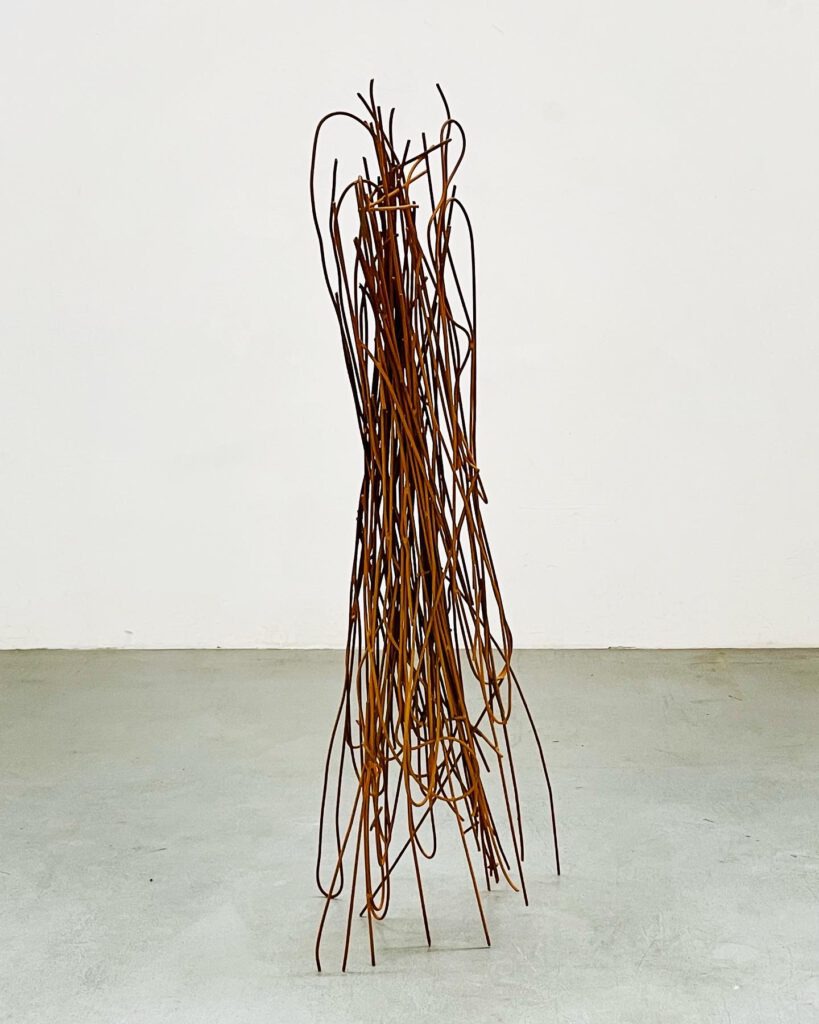
“Thus, the works on display form a spatial network of artistic testimonies and traces of a former presence, of past activity. As at a crime scene, viewers can grasp the aftermath of something that once was, without being able to fully unravel what actually happened. Simon Faithful displays the flooded vacation resort of a civil engineer; Bastian Hoffmann contributes a Porsche engine that has melted onto the floor; Stella Geppert freezes the clay-stirred traces of a group of people at work; Birte Bosse installs pieces of broken-out concrete rebar; and Astali/Peirce place an already mineralized T-shirt—to name just a few examples.”
…
PROGRAMME
Sat 17 Oct from 5 pm
Vernissage
Welcome speeches and introduction to the exhibition
The artists and the curator will be in attendance
Open until 8 pm
(Free admission)
Sun 1 Nov / Sun 8 Nov, both at 3 pm
Sunday tour
with Joos Ziegler and Stephan Klee respectively
Sat 7 Nov 2026 at 2 pm
The Long Afternoon of Art
with a guided tour and panel discussion
Open until 7 pm
(Free admission)
Sun 13 Dec 2026 at 3 pm
Finissage
with a guided tour by Stephan Klee
and closure
Open until 5 pm
(Free admission)
Exhibition dates
18 Oct – 13 Dec 2026
Tue – Sun 11 am – 5 pm
Venue
Old Town Hall, Göttingen (1st floor)
Markt 9
37073 Göttingen
Admission
€3.00 / €1.50 (concession)
Free for visitors under 18
Free with the Kultur-Ticket
Free admission to Vernissages and Finissages
Event images:
Simon Faithfull Reenactment for a Future Scenario no. 2: Cape Romano, HD video, 6min loop, 2019
Courtesy of the artist
-

- Aline Schwörer “Shells of unwritten times”, 2022, photo@ Silke Briehl

-
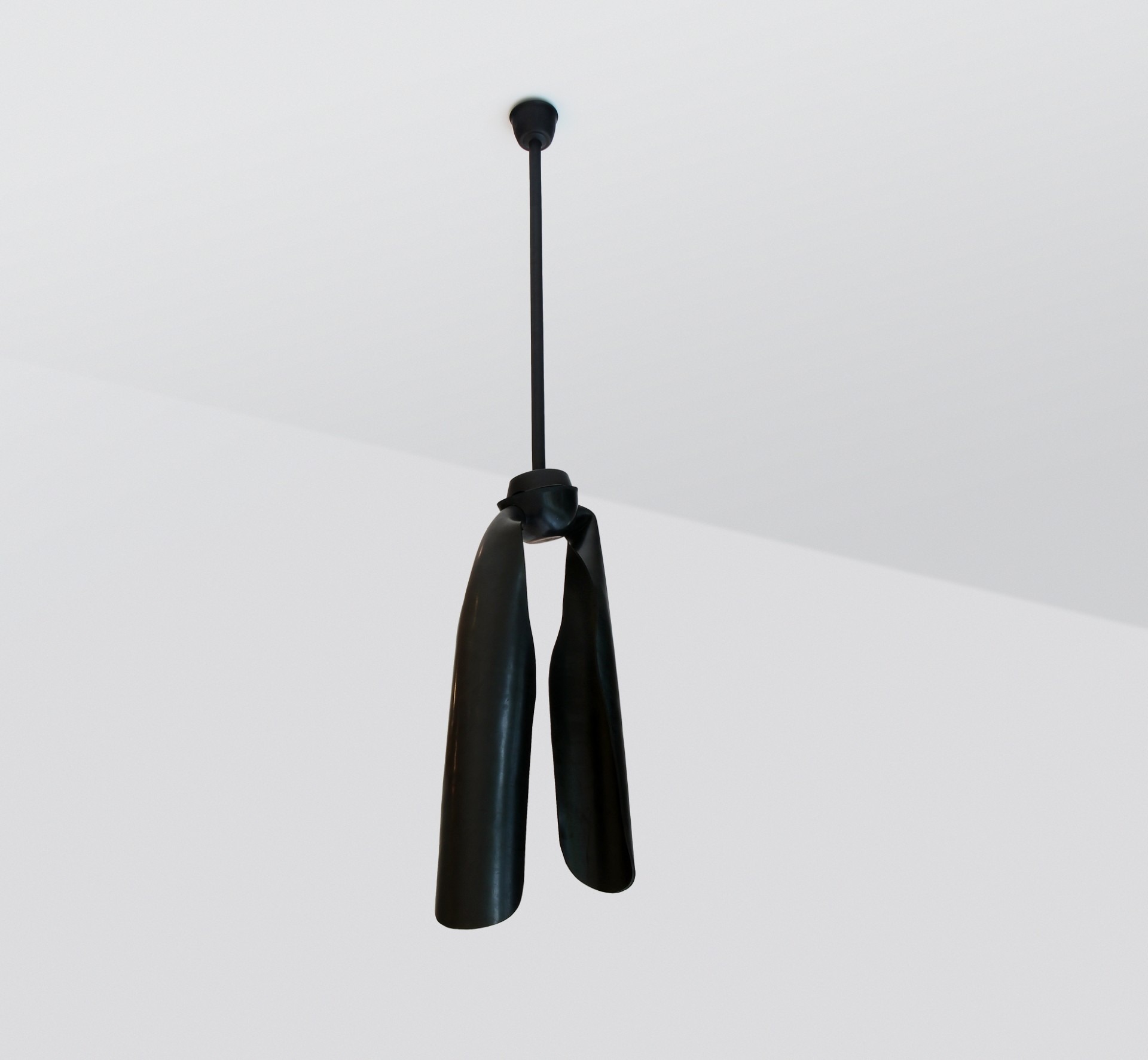
- Geerten Verheus “Kanikule” (Dog Day Nr. 12), 2025
-
- Simon Faithfull: “Reenactment for a Future Scenario no.2: Cape Romano” (still), 2019

-

- Bastian Hoffman “Flatsix”, 2019

-

- Delia Jürgens echoes-in-rain-

-

- Stella Geppert “Snow Leopard Track”, 2026

-

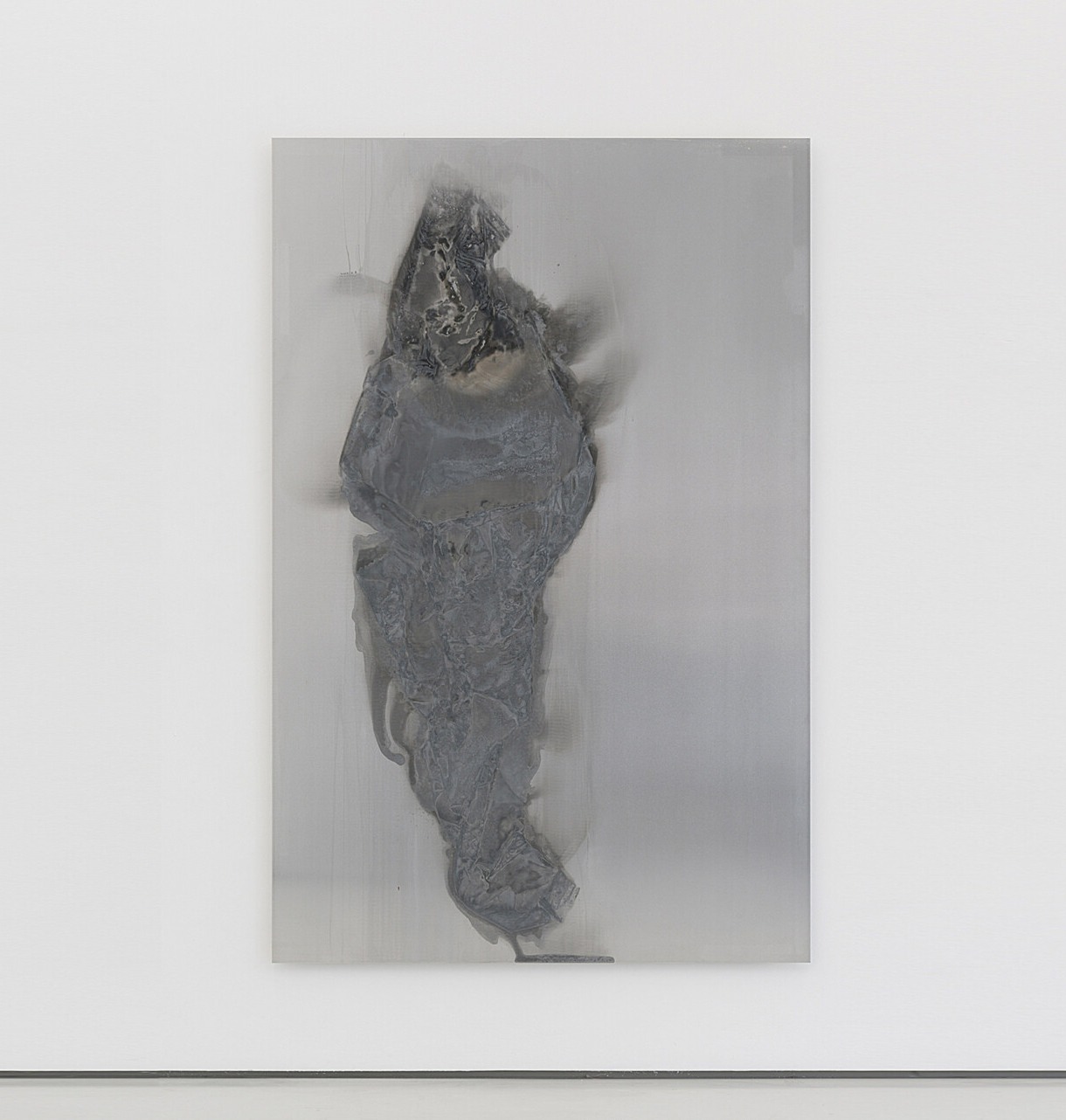
- Felix Kiessling “Arbeit”, 2025
-
- Birte Bosse “Der Zauberlehrling”, 2022
-
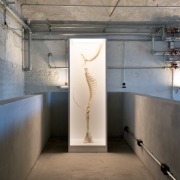
- Frederik Marks “The Knee of Another”, 2023

-

- Olga Fedorova “INSTAGRAM Snippet, 2025 – ongoing

-

- Astali/Peirce “Monobloc” 2020

-

- Virginie Ittah “Anaïs”, 2025

THE ANNUAL PROGRAMME
TRANSHUMAN (2026)
>POSTHUMAN (2027)
The Kunstverein Göttingen continues to follow the proven two-year biennial programme rhythm in order to enable the most in-depth examination possible of the programme’s overarching themes. After TERRA DIASPORA (2024–2025) explored contemporary phenomena, our current programme looks to the near and distant future.
The two-year programme TRANSHUMAN >POSTHUMAN (2026 > 2027) takes a critical look at the global transformation anticipated by some schools of thought: the transition from the anthropocentric humans of our time to the technically optimised transhumans of the near future and, even further into the future of our species, to posthumans. In short: the development of humanity from modern humanism to transhumanism to posthumanism.
The basic theme for the first year is TRANSHUMAN (2026) and includes four solo exhibitions and one group exhibition, bringing together artistic approaches and works to form a collection of perspectives and aspects of transhumanism. The formal and thematic basis of all exhibitions is the artistic exploration of the acceleration of technological development and capitalist growth, and the desired biotechnological optimisation of the human body and mind. The resulting social upheavals are already taking place in many ways in our present, with drastic consequences for coexistence within the span of a generation. These acute experiences flow into the visions of the approaching future and into the collective critical reflection of both the artists and our audience. With this in mind, a wide-ranging discourse and education programme is offered. We also aim to publish the annual programme again. The ideology of transhumanism should not be propagated uncritically, but rather deconstructed as critically as possible, collectively and on the basis of the works on display. We cordially invite all interested parties to join us.
We would like to thank our sponsors: Stiftung Niedersachsen, Niedersächsisches Ministerium für Wissenschaft und Kultur, Stadt Göttingen, Sparkasse Göttingen und Landschaftsverband Südniedersachsen e.V.

Datum
17. Oktober (Samstag) - 17. Oktober (Samstag)
Veranstaltungsort
Kunstverein Göttingen im Alten Rathaus
Markt 9 | 37073 Göttingen
Öffnungszeiten
Saturday, 17 October at 5 – 8 pm
TRANSHUMAN N°5 Dysis Astali/Peirce, Birte Bosse, Simon Faithfull, Olga Fedorova, Stella Geppert, Bastian Hoffmann, Virginie Ittah, Delia Jürgens, Felix Kiessling, Frederik Marks, Aline Schwörer, Geerten Verheus curated by Stephan Klee Vernissage Saturday 17
TRANSHUMAN N°5
Dysis
Astali/Peirce, Birte Bosse, Simon Faithfull, Olga Fedorova, Stella Geppert, Bastian Hoffmann, Virginie Ittah, Delia Jürgens, Felix Kiessling, Frederik Marks, Aline Schwörer, Geerten Verheus
curated by Stephan Klee
Vernissage
Saturday 17 October, 5 pm
Open until 8 pm
free admission)
Exhibition dates
18 Oct – 13 Dec 2026
Tue – Sun 11 am – 5 pm
Venue
Old Town Hall, Göttingen (1st floor)
Markt 9
37073 Göttingen
Admission
€3.00 / €1.50 (concession)
Free for visitors under 18
Free with the Kultur-Ticket
Free admission to Vernissages and Finissages
INTRODUCTION
“The end of the world has already occurred. We can be uncannily precise about the date on which the world ended. Convenience is not readily associated with historiography, nor indeed with geological time. But in this case, it is uncannily clear. It was April 1784, when James Watt patented the steam engine, an act that commenced the depositing of carbon in Earth’s crust—namely, the inception of humanity as a geophysical force on a planetary scale.”*
Dysis – Δύσις is an Ancient Greek word meaning, amongst other things, ‘the setting of a celestial body’, ‘the west’, ‘twilight’, ‘setting’ and ‘hiding place’. In Greek mythology, Dysis is also the patron goddess of sunset, the twilight phase marking the transition from day to night, which is also seen as a moment of reflection and transformation. The final group exhibition of 2026, bearing this title, juxtaposes works relating to the annual theme ‘TRANSHUMAN’ in the 400-square-metre exhibition spaces of the Old Town Hall in Göttingen. To this end, it brings together internationally recognised artists with significant new discoveries, placing the respective works in new, often illuminating contexts. The whole endeavour also represents new ground in curatorial practice.
For Dysis, the scenario of an abandoned future following our current civilisation is deliberately staged: only scattered sculptures and objects in the medieval gallery spaces offer a glimpse of past human activity, whilst deformed, functionless objects still bear witness to our current advanced civilisation. Added to this are film scenes of dilapidated architecture and dysfunctional means of transport. Thus, the works on display form a spatial network of artistic testimonies and traces of a former presence, of past activity. As if at a crime scene, viewers can grasp the aftermath of something that once was, without being able to fully unravel what actually happened. Simon Faithful displays the flooded holiday resort of an oil industry engineer; Bastian Hoffmann contributes a Porsche engine that has melted onto the floor; Stella Geppert freezes the clay-stirred traces of a group of people at work; Birte Bosse exhibits fragments of broken-out concrete reinforcement; and Astali/Peirce place an already mineralised T-shirt on display – to name but a few examples.
All the works on display are characterised by a sense of final enigma; they evoke thoughts and feelings without ever being able to deliver a clear conclusion or a clear reason for their erratic presence. In this state of tension between intuition and denial, they remain fixed in space and condition. In doing so, they allude, amongst other things, to the philosophical complex of speculative realism (or the related field of object-oriented ontology), which asserts the following: things in themselves possess an autonomous realm that eludes definitive human perception or scientific measurability. Consequently, there must be a substantial part of reality that lies outside our consciousness. This, in turn, means that things in the world actually behave autonomously and are not organised in an anthropocentric manner; they are, as it were, causally arranged around human perception and research. Timothy Morton expands this understanding of the world with what he calls ‘hyper-objects’. These are far-reaching processes and developments which last so long, or are so complex, that they elude both the human imagination and complete scientific analysis, yet are constantly transforming our planet. For him, the disintegration of the world brought about by the expanding, technological and mechanised transformation of global resources into energy, products, computer processes and services is an example of a hyperobject.
Furthermore, the exhibition’s installations often confront visitors, almost casually, with the question: “Is this the art on display, or was it already there before?” This gives rise to an unusual interplay between everyday life and high culture: a near future that has already passed – or rather, the possibility of our era’s past – has arrived in the reality of our present. Furthermore, there are individual ‘creatures’ from a vibrant, posthuman future, whose activities are currently taking over the fallow terrain of this exhibition. Examples include Virginie Ittah’s wax creature or Aline Schwörer’s new species.
All in all, this paints the following picture for the near future: the era of transhumanism has failed and is already drawing towards its final end, whilst the new era of posthumanism is already on the horizon. The exhibition thus presents a phase of transition, the coexistence of two eras. A liminal state is created – a staged liminality in the chronology of time. For visitors, questions arise such as: ‘Are we already at the twilight of an era, and what are its relics?’ – ‘How would we position ourselves in this twilight of the West?’ and: ‘What future might await us on the dawn of change?’ In this sense, this concluding exhibition in 2026 also serves as a kind of bridge to the coming exhibition year, 2027: >POSTHUMAN.
* in: Timothy Morton in “Hyperobjects – Philosophy and Ecology After the End of the World”, 2013, p. 7
PROGRAMME
Sat 17 Oct from 5 pm
Vernissage
Welcome speeches and introduction to the exhibition
The artists and the curator will be in attendance
Open until 8 pm
(Free admission)
Sun 1 Nov / Sun 8 Nov, both at 3 pm
Sunday tour
with Joos Ziegler and Stephan Klee respectively
Sat 7 Nov 2026 at 2 pm
The Long Afternoon of Art
with a guided tour and panel discussion
Open until 7 pm
(Free admission)
Sun 13 Dec 2026 at 3 pm
Finissage
with a guided tour by Stephan Klee
and closure
Open until 5 pm
(Free admission)
Eventimages:
Simon Faithfull Reenactment for a Future Scenario no. 2: Cape Romano, HD video, 6min loop, 2019
Courtesy of the artist
-
- Stella Geppert “Snow Leopard Track”, 2026
-
- Geerten Verheus “Kanikule” (Dog Day Nr. 12), 2025
-
- Simon Faithfull: “Reenactment for a Future Scenario no.2: Cape Romano” (still), 2019
-
- Astali/Peirce “Monobloc” 2020
-
- Frederik Marks “The Knee of Another”, 2023
-
- Bastian Hoffman “Flatsix”, 2019
-
- Felix Kiessling “Arbeit”, 2025
-
- Aline Schwörer “Shells of unwritten times”, 2022, photo@ Silke Briehl
-
- Virginie Ittah “Anaïs”, 2025
THE ANNUAL PROGRAMME
TRANSHUMAN (2026)
>POSTHUMAN (2027)
The Kunstverein Göttingen continues to follow the proven two-year biennial programme rhythm in order to enable the most in-depth examination possible of the programme’s overarching themes. After TERRA DIASPORA (2024–2025) explored contemporary phenomena, our current programme looks to the near and distant future.
The two-year programme TRANSHUMAN >POSTHUMAN (2026 > 2027) takes a critical look at the global transformation anticipated by some schools of thought: the transition from the anthropocentric humans of our time to the technically optimised transhumans of the near future and, even further into the future of our species, to posthumans. In short: the development of humanity from modern humanism to transhumanism to posthumanism.
The basic theme for the first year is TRANSHUMAN (2026) and includes four solo exhibitions and one group exhibition, bringing together artistic approaches and works to form a collection of perspectives and aspects of transhumanism. The formal and thematic basis of all exhibitions is the artistic exploration of the acceleration of technological development and capitalist growth, and the desired biotechnological optimisation of the human body and mind. The resulting social upheavals are already taking place in many ways in our present, with drastic consequences for coexistence within the span of a generation. These acute experiences flow into the visions of the approaching future and into the collective critical reflection of both the artists and our audience. With this in mind, a wide-ranging discourse and education programme is offered. We also aim to publish the annual programme again. The ideology of transhumanism should not be propagated uncritically, but rather deconstructed as critically as possible, collectively and on the basis of the works on display. We cordially invite all interested parties to join us.
We would like to thank our sponsors: Stiftung Niedersachsen, Niedersächsisches Ministerium für Wissenschaft und Kultur, Stadt Göttingen, Sparkasse Göttingen und Landschaftsverband Südniedersachsen e.V.
Datum
18. Oktober (Sonntag) - 13. Dezember (Sonntag)
Veranstaltungsort
Kunstverein Göttingen im Alten Rathaus
Markt 9 | 37073 Göttingen
Öffnungszeiten
Tuesday – Sunday 11 am – 6 pm
November
TRANSHUMAN N°5 Dysis Astali/Peirce, Birte Bosse, Simon Faithfull, Olga Fedorova, Stella Geppert, Bastian Hoffmann, Virginie Ittah, Delia Jürgens, Felix Kiessling, Frederik Marks, Aline Schwörer, Geerten Verheus curated by Stephan Klee Vernissage Saturday 17
TRANSHUMAN N°5
Dysis
Astali/Peirce, Birte Bosse, Simon Faithfull, Olga Fedorova, Stella Geppert, Bastian Hoffmann, Virginie Ittah, Delia Jürgens, Felix Kiessling, Frederik Marks, Aline Schwörer, Geerten Verheus
curated by Stephan Klee
Vernissage
Saturday 17 October, 5 pm
Open until 8 pm
free admission)
Exhibition dates
18 Oct – 13 Dec 2026
Tue – Sun 11 am – 5 pm
Venue
Old Town Hall, Göttingen (1st floor)
Markt 9
37073 Göttingen
Admission
€3.00 / €1.50 (concession)
Free for visitors under 18
Free with the Kultur-Ticket
Free admission to Vernissages and Finissages
INTRODUCTION
“The end of the world has already occurred. We can be uncannily precise about the date on which the world ended. Convenience is not readily associated with historiography, nor indeed with geological time. But in this case, it is uncannily clear. It was April 1784, when James Watt patented the steam engine, an act that commenced the depositing of carbon in Earth’s crust—namely, the inception of humanity as a geophysical force on a planetary scale.”*
Dysis – Δύσις is an Ancient Greek word meaning, amongst other things, ‘the setting of a celestial body’, ‘the west’, ‘twilight’, ‘setting’ and ‘hiding place’. In Greek mythology, Dysis is also the patron goddess of sunset, the twilight phase marking the transition from day to night, which is also seen as a moment of reflection and transformation. The final group exhibition of 2026, bearing this title, juxtaposes works relating to the annual theme ‘TRANSHUMAN’ in the 400-square-metre exhibition spaces of the Old Town Hall in Göttingen. To this end, it brings together internationally recognised artists with significant new discoveries, placing the respective works in new, often illuminating contexts. The whole endeavour also represents new ground in curatorial practice.
For Dysis, the scenario of an abandoned future following our current civilisation is deliberately staged: only scattered sculptures and objects in the medieval gallery spaces offer a glimpse of past human activity, whilst deformed, functionless objects still bear witness to our current advanced civilisation. Added to this are film scenes of dilapidated architecture and dysfunctional means of transport. Thus, the works on display form a spatial network of artistic testimonies and traces of a former presence, of past activity. As if at a crime scene, viewers can grasp the aftermath of something that once was, without being able to fully unravel what actually happened. Simon Faithful displays the flooded holiday resort of an oil industry engineer; Bastian Hoffmann contributes a Porsche engine that has melted onto the floor; Stella Geppert freezes the clay-stirred traces of a group of people at work; Birte Bosse exhibits fragments of broken-out concrete reinforcement; and Astali/Peirce place an already mineralised T-shirt on display – to name but a few examples.
All the works on display are characterised by a sense of final enigma; they evoke thoughts and feelings without ever being able to deliver a clear conclusion or a clear reason for their erratic presence. In this state of tension between intuition and denial, they remain fixed in space and condition. In doing so, they allude, amongst other things, to the philosophical complex of speculative realism (or the related field of object-oriented ontology), which asserts the following: things in themselves possess an autonomous realm that eludes definitive human perception or scientific measurability. Consequently, there must be a substantial part of reality that lies outside our consciousness. This, in turn, means that things in the world actually behave autonomously and are not organised in an anthropocentric manner; they are, as it were, causally arranged around human perception and research. Timothy Morton expands this understanding of the world with what he calls ‘hyper-objects’. These are far-reaching processes and developments which last so long, or are so complex, that they elude both the human imagination and complete scientific analysis, yet are constantly transforming our planet. For him, the disintegration of the world brought about by the expanding, technological and mechanised transformation of global resources into energy, products, computer processes and services is an example of a hyperobject.
Furthermore, the exhibition’s installations often confront visitors, almost casually, with the question: “Is this the art on display, or was it already there before?” This gives rise to an unusual interplay between everyday life and high culture: a near future that has already passed – or rather, the possibility of our era’s past – has arrived in the reality of our present. Furthermore, there are individual ‘creatures’ from a vibrant, posthuman future, whose activities are currently taking over the fallow terrain of this exhibition. Examples include Virginie Ittah’s wax creature or Aline Schwörer’s new species.
All in all, this paints the following picture for the near future: the era of transhumanism has failed and is already drawing towards its final end, whilst the new era of posthumanism is already on the horizon. The exhibition thus presents a phase of transition, the coexistence of two eras. A liminal state is created – a staged liminality in the chronology of time. For visitors, questions arise such as: ‘Are we already at the twilight of an era, and what are its relics?’ – ‘How would we position ourselves in this twilight of the West?’ and: ‘What future might await us on the dawn of change?’ In this sense, this concluding exhibition in 2026 also serves as a kind of bridge to the coming exhibition year, 2027: >POSTHUMAN.
* in: Timothy Morton in “Hyperobjects – Philosophy and Ecology After the End of the World”, 2013, p. 7
PROGRAMME
Sat 17 Oct from 5 pm
Vernissage
Welcome speeches and introduction to the exhibition
The artists and the curator will be in attendance
Open until 8 pm
(Free admission)
Sun 1 Nov / Sun 8 Nov, both at 3 pm
Sunday tour
with Joos Ziegler and Stephan Klee respectively
Sat 7 Nov 2026 at 2 pm
The Long Afternoon of Art
with a guided tour and panel discussion
Open until 7 pm
(Free admission)
Sun 13 Dec 2026 at 3 pm
Finissage
with a guided tour by Stephan Klee
and closure
Open until 5 pm
(Free admission)
Eventimages:
Simon Faithfull Reenactment for a Future Scenario no. 2: Cape Romano, HD video, 6min loop, 2019
Courtesy of the artist
-
- Stella Geppert “Snow Leopard Track”, 2026
-
- Geerten Verheus “Kanikule” (Dog Day Nr. 12), 2025
-
- Simon Faithfull: “Reenactment for a Future Scenario no.2: Cape Romano” (still), 2019
-
- Astali/Peirce “Monobloc” 2020
-
- Frederik Marks “The Knee of Another”, 2023
-
- Bastian Hoffman “Flatsix”, 2019
-
- Felix Kiessling “Arbeit”, 2025
-
- Aline Schwörer “Shells of unwritten times”, 2022, photo@ Silke Briehl
-
- Virginie Ittah “Anaïs”, 2025
THE ANNUAL PROGRAMME
TRANSHUMAN (2026)
>POSTHUMAN (2027)
The Kunstverein Göttingen continues to follow the proven two-year biennial programme rhythm in order to enable the most in-depth examination possible of the programme’s overarching themes. After TERRA DIASPORA (2024–2025) explored contemporary phenomena, our current programme looks to the near and distant future.
The two-year programme TRANSHUMAN >POSTHUMAN (2026 > 2027) takes a critical look at the global transformation anticipated by some schools of thought: the transition from the anthropocentric humans of our time to the technically optimised transhumans of the near future and, even further into the future of our species, to posthumans. In short: the development of humanity from modern humanism to transhumanism to posthumanism.
The basic theme for the first year is TRANSHUMAN (2026) and includes four solo exhibitions and one group exhibition, bringing together artistic approaches and works to form a collection of perspectives and aspects of transhumanism. The formal and thematic basis of all exhibitions is the artistic exploration of the acceleration of technological development and capitalist growth, and the desired biotechnological optimisation of the human body and mind. The resulting social upheavals are already taking place in many ways in our present, with drastic consequences for coexistence within the span of a generation. These acute experiences flow into the visions of the approaching future and into the collective critical reflection of both the artists and our audience. With this in mind, a wide-ranging discourse and education programme is offered. We also aim to publish the annual programme again. The ideology of transhumanism should not be propagated uncritically, but rather deconstructed as critically as possible, collectively and on the basis of the works on display. We cordially invite all interested parties to join us.
We would like to thank our sponsors: Stiftung Niedersachsen, Niedersächsisches Ministerium für Wissenschaft und Kultur, Stadt Göttingen, Sparkasse Göttingen und Landschaftsverband Südniedersachsen e.V.
Datum
18. Oktober (Sonntag) - 13. Dezember (Sonntag)
Veranstaltungsort
Kunstverein Göttingen im Alten Rathaus
Markt 9 | 37073 Göttingen
Öffnungszeiten
Tuesday – Sunday 11 am – 6 pm
Dezember
TRANSHUMAN N°5 Dysis Astali/Peirce, Birte Bosse, Simon Faithfull, Olga Fedorova, Stella Geppert, Bastian Hoffmann, Virginie Ittah, Delia Jürgens, Felix Kiessling, Frederik Marks, Aline Schwörer, Geerten Verheus curated by Stephan Klee Vernissage Saturday 17
TRANSHUMAN N°5
Dysis
Astali/Peirce, Birte Bosse, Simon Faithfull, Olga Fedorova, Stella Geppert, Bastian Hoffmann, Virginie Ittah, Delia Jürgens, Felix Kiessling, Frederik Marks, Aline Schwörer, Geerten Verheus
curated by Stephan Klee
Vernissage
Saturday 17 October, 5 pm
Open until 8 pm
free admission)
Exhibition dates
18 Oct – 13 Dec 2026
Tue – Sun 11 am – 5 pm
Venue
Old Town Hall, Göttingen (1st floor)
Markt 9
37073 Göttingen
Admission
€3.00 / €1.50 (concession)
Free for visitors under 18
Free with the Kultur-Ticket
Free admission to Vernissages and Finissages
INTRODUCTION
“The end of the world has already occurred. We can be uncannily precise about the date on which the world ended. Convenience is not readily associated with historiography, nor indeed with geological time. But in this case, it is uncannily clear. It was April 1784, when James Watt patented the steam engine, an act that commenced the depositing of carbon in Earth’s crust—namely, the inception of humanity as a geophysical force on a planetary scale.”*
Dysis – Δύσις is an Ancient Greek word meaning, amongst other things, ‘the setting of a celestial body’, ‘the west’, ‘twilight’, ‘setting’ and ‘hiding place’. In Greek mythology, Dysis is also the patron goddess of sunset, the twilight phase marking the transition from day to night, which is also seen as a moment of reflection and transformation. The final group exhibition of 2026, bearing this title, juxtaposes works relating to the annual theme ‘TRANSHUMAN’ in the 400-square-metre exhibition spaces of the Old Town Hall in Göttingen. To this end, it brings together internationally recognised artists with significant new discoveries, placing the respective works in new, often illuminating contexts. The whole endeavour also represents new ground in curatorial practice.
For Dysis, the scenario of an abandoned future following our current civilisation is deliberately staged: only scattered sculptures and objects in the medieval gallery spaces offer a glimpse of past human activity, whilst deformed, functionless objects still bear witness to our current advanced civilisation. Added to this are film scenes of dilapidated architecture and dysfunctional means of transport. Thus, the works on display form a spatial network of artistic testimonies and traces of a former presence, of past activity. As if at a crime scene, viewers can grasp the aftermath of something that once was, without being able to fully unravel what actually happened. Simon Faithful displays the flooded holiday resort of an oil industry engineer; Bastian Hoffmann contributes a Porsche engine that has melted onto the floor; Stella Geppert freezes the clay-stirred traces of a group of people at work; Birte Bosse exhibits fragments of broken-out concrete reinforcement; and Astali/Peirce place an already mineralised T-shirt on display – to name but a few examples.
All the works on display are characterised by a sense of final enigma; they evoke thoughts and feelings without ever being able to deliver a clear conclusion or a clear reason for their erratic presence. In this state of tension between intuition and denial, they remain fixed in space and condition. In doing so, they allude, amongst other things, to the philosophical complex of speculative realism (or the related field of object-oriented ontology), which asserts the following: things in themselves possess an autonomous realm that eludes definitive human perception or scientific measurability. Consequently, there must be a substantial part of reality that lies outside our consciousness. This, in turn, means that things in the world actually behave autonomously and are not organised in an anthropocentric manner; they are, as it were, causally arranged around human perception and research. Timothy Morton expands this understanding of the world with what he calls ‘hyper-objects’. These are far-reaching processes and developments which last so long, or are so complex, that they elude both the human imagination and complete scientific analysis, yet are constantly transforming our planet. For him, the disintegration of the world brought about by the expanding, technological and mechanised transformation of global resources into energy, products, computer processes and services is an example of a hyperobject.
Furthermore, the exhibition’s installations often confront visitors, almost casually, with the question: “Is this the art on display, or was it already there before?” This gives rise to an unusual interplay between everyday life and high culture: a near future that has already passed – or rather, the possibility of our era’s past – has arrived in the reality of our present. Furthermore, there are individual ‘creatures’ from a vibrant, posthuman future, whose activities are currently taking over the fallow terrain of this exhibition. Examples include Virginie Ittah’s wax creature or Aline Schwörer’s new species.
All in all, this paints the following picture for the near future: the era of transhumanism has failed and is already drawing towards its final end, whilst the new era of posthumanism is already on the horizon. The exhibition thus presents a phase of transition, the coexistence of two eras. A liminal state is created – a staged liminality in the chronology of time. For visitors, questions arise such as: ‘Are we already at the twilight of an era, and what are its relics?’ – ‘How would we position ourselves in this twilight of the West?’ and: ‘What future might await us on the dawn of change?’ In this sense, this concluding exhibition in 2026 also serves as a kind of bridge to the coming exhibition year, 2027: >POSTHUMAN.
* in: Timothy Morton in “Hyperobjects – Philosophy and Ecology After the End of the World”, 2013, p. 7
PROGRAMME
Sat 17 Oct from 5 pm
Vernissage
Welcome speeches and introduction to the exhibition
The artists and the curator will be in attendance
Open until 8 pm
(Free admission)
Sun 1 Nov / Sun 8 Nov, both at 3 pm
Sunday tour
with Joos Ziegler and Stephan Klee respectively
Sat 7 Nov 2026 at 2 pm
The Long Afternoon of Art
with a guided tour and panel discussion
Open until 7 pm
(Free admission)
Sun 13 Dec 2026 at 3 pm
Finissage
with a guided tour by Stephan Klee
and closure
Open until 5 pm
(Free admission)
Eventimages:
Simon Faithfull Reenactment for a Future Scenario no. 2: Cape Romano, HD video, 6min loop, 2019
Courtesy of the artist
-
- Stella Geppert “Snow Leopard Track”, 2026
-
- Geerten Verheus “Kanikule” (Dog Day Nr. 12), 2025
-
- Simon Faithfull: “Reenactment for a Future Scenario no.2: Cape Romano” (still), 2019
-
- Astali/Peirce “Monobloc” 2020
-
- Frederik Marks “The Knee of Another”, 2023
-
- Bastian Hoffman “Flatsix”, 2019
-
- Felix Kiessling “Arbeit”, 2025
-
- Aline Schwörer “Shells of unwritten times”, 2022, photo@ Silke Briehl
-
- Virginie Ittah “Anaïs”, 2025
THE ANNUAL PROGRAMME
TRANSHUMAN (2026)
>POSTHUMAN (2027)
The Kunstverein Göttingen continues to follow the proven two-year biennial programme rhythm in order to enable the most in-depth examination possible of the programme’s overarching themes. After TERRA DIASPORA (2024–2025) explored contemporary phenomena, our current programme looks to the near and distant future.
The two-year programme TRANSHUMAN >POSTHUMAN (2026 > 2027) takes a critical look at the global transformation anticipated by some schools of thought: the transition from the anthropocentric humans of our time to the technically optimised transhumans of the near future and, even further into the future of our species, to posthumans. In short: the development of humanity from modern humanism to transhumanism to posthumanism.
The basic theme for the first year is TRANSHUMAN (2026) and includes four solo exhibitions and one group exhibition, bringing together artistic approaches and works to form a collection of perspectives and aspects of transhumanism. The formal and thematic basis of all exhibitions is the artistic exploration of the acceleration of technological development and capitalist growth, and the desired biotechnological optimisation of the human body and mind. The resulting social upheavals are already taking place in many ways in our present, with drastic consequences for coexistence within the span of a generation. These acute experiences flow into the visions of the approaching future and into the collective critical reflection of both the artists and our audience. With this in mind, a wide-ranging discourse and education programme is offered. We also aim to publish the annual programme again. The ideology of transhumanism should not be propagated uncritically, but rather deconstructed as critically as possible, collectively and on the basis of the works on display. We cordially invite all interested parties to join us.
We would like to thank our sponsors: Stiftung Niedersachsen, Niedersächsisches Ministerium für Wissenschaft und Kultur, Stadt Göttingen, Sparkasse Göttingen und Landschaftsverband Südniedersachsen e.V.
Datum
18. Oktober (Sonntag) - 13. Dezember (Sonntag)
Veranstaltungsort
Kunstverein Göttingen im Alten Rathaus
Markt 9 | 37073 Göttingen
Öffnungszeiten
Tuesday – Sunday 11 am – 6 pm