Tag Archive for: TRANSHUMAN

Exhibition – Nieves de la Fuente

TRANSHUMAN N°4
Nieves de la Fuente
Xenoform

curated by Stephan Klee


Vernissage
Saturday, 8 August 5 pm
Open until 8 pm
(No admission fee)

Duration
9 Aug – 4 Oct 2026
Tue – Sun 11 am – 5 pm

Location

Altes Rathaus Göttingen (1. OG)
Markt 9
37073 Göttingen

Admission fee:
€ 3,00 / € 1,50 (reduced)
Free admission for guests aged 18 and under
Free admission with a Kultur Ticket
Free admission to exhibition Vernissages and Finissages


INTRODUCTION

‘We believe there is no material problem – whether caused by nature or technology – that cannot be solved by more technology!’*

If the technological utopian visions of transhumanism are to enter a phase of widespread realisation in the foreseeable future, certain plans devised by the heads of leading American technology conglomerates will play a decisive role. There is broad consensus amongst them that space should be colonised as quickly as possible in order to meet the demands of rising production using extraterrestrial resources. Earth’s resources are finite; a new race has begun, only this time the motto is not ‘Go West!’, but rather ‘Go Mars!’. As a result, commercial spaceflight is taking on a new key role in driving forward an agenda of expansive, private technological implementation; Elon Musk with ‘SpaceX’ and ‘Starlink’, and Jeff Bezos with ‘Blue Origin’, are prominent examples.

Many works by the Spanish artist Nieves de la Fuente explore relevant aspects of this theme. Her multimedia installations, for example, examine large-scale mining and depict, amongst other things, the total topographical upheaval of the original landscape, which, following extraction, in its lifeless otherness, is strikingly reminiscent of the surface of other planets. By blending real-life footage with digitally scanned and computer-generated visualisations, the territories depicted become even more elusive on the one hand, whilst on the other, they appear even more futuristic within the high-tech simulation. The past, present and future of the areas shown merge into ethereal, almost surreal visions, which nevertheless highlight an urgent need for action. For it must be borne in mind that such devastated areas do indeed exist on Earth and are spreading. This thematic complex is represented, amongst others, by the series of works BridgeNo habrá servicio los Domingos ni en el cumpleaños de la Reina Victoria and Reliquia de las Disciplinas Geográficas, all of which form part of this exhibition.
Other projects in the exhibition, such as Night Companions or ODD//FOES (Orbital Distant Debris Falling on Earth Surface), address the growing number of satellites that form a network encircling the Earth or, far from it, traverse space as ‘pathfinders’. These spacecraft are already essential for human communication and navigation and will form the basis for a possible conquest of space in the future. But who has control over these spacecraft, and what happens if they fail? On Earth, the stars once guided both animals and humans; today, the former are often at a disadvantage, as they rely on the stars but can no longer distinguish them from the glowing ‘satellite dots’ in the night sky.

Nieves de la Fuente is presenting these five groups of works in her solo exhibition in Göttingen, thereby enriching the annual theme TRANSHUMAN in a multifaceted way with new areas and aspects drawn from her body of work. Although complex in content, the artist brings the themes to life using real-life examples and, through her distinctive visual language and highly sophisticated animations, makes them easily comprehensible and accessible without remaining purely documentary. Rather, the real-life case studies serve as a basis for the creation of highly innovative, independent works of art that fuse the familiar with the unfamiliar. This creates a tension that allows visitors to explore the ‘art environments’ generated by the artist aesthetically, acoustically and tactilely. In doing so, Nieves de la Fuente exemplifies where ‘transhuman tendencies’ are already taking shape in the present and how this development is fundamentally broadening the human perspective on interplanetary constellations and possibilities. However, new scope for action also requires social discourse to weigh up the potential consequences for the general public. The Kunstverein Göttingen facilitates this collective, critical discourse through its supporting programme and on the basis of its exhibitions of contemporary art, as an important part of its own social agenda.

* Marc Andreessen in the Techno-Optimist Manifesto, 2023


PROGRAMME

Sat 8 Aug from 5 pm
Vernissage
Welcome speeches and introduction to the exhibition
The artist and the curator will be in attendance
Open until 8 pm, free admission

Sun 30 Aug / Sun 20 Sep / Sun 27 Sep
3 pm on each occasion
Sunday Tours
with Joos Ziegler and Stephan Klee respectively

Sat 3 Oct 2026, 11 am – 4 pm
The Art Matinée
with a guided tour and panel discussion

Sun 4 Oct 2026 at 11 am
Finissage
“Walk and Talk” – a tour of the exhibition with curator Stephan Klee in German and English
and a closure
Open until 3 pm, free admission


Event images:
Nieves de la Fuente ODD // FOES – Series, 2023, computer-generated image, courtesy of the artist, @ VG Bild-Kunst Bonn, 2026


ABOUT THE ARTIST

Nieves de la Fuente was born in Madrid in 1988; she lives and works in Cologne and Madrid. After completing her Bachelor’s degree in Art at the Universidad Complutense de Madrid (2011) and studying at the Kunsthochschule Kassel (2011–2013), she completed a postgraduate degree in Media Arts at the Kunsthochschule für Medien in Cologne in 2016.

Working at the intersection of economically transformed spaces and multimedia installations in the gallery context, Nieves de la Fuente frequently employs virtual reality, browser experiences or augmented reality to immerse viewers of her works in historical events, surrealist scenarios or real locations of particular significance – such as the moon-like (or rather Mars-like) Rio Tinto open-cast mining area in southern Spain. Among other things, she works on ongoing series which – thanks to digital technology – explore the (re-)visualisation of impossible worlds and their fusion with real space. Her main focus lies on computer-assisted imaging and mapping, as well as on the relationship to visual perception – a relevant aspect at a time when computer-assisted imaging technologies are developing at a rapid pace.

Among other roles, she worked as an artistic-academic research assistant in the Art/Transmedia Space programme at the KHM Cologne (2018/2019) and at Burg Giebichenstein Halle (2019/2021). In addition to numerous international residencies, for example in Montepulciano, Montréal, Linz, Warehouse (online), Santander and Villa Aurora, Los Angeles, Nieves de la Fuente Gutiérrez has received numerous awards and grants, most recently the North Rhine-Westphalia Women Artists’ Prize 2022.

Quote:
“For me, art is a discursive tool for the production of spatial constructions. I have mainly worked with sculpture and installations to pursue my process of inquiry. However, these installations are imbued with technology: both as a medium and as a reference to themselves and their malleability. My choice of virtuality and the production of experience as a medium must be viewed through a political lens. As an artist , I wish to explore the cultural potential of intellectual and digital landscapes as subjects of artistic research. Over the last years, I have been working with my mother’s birthplace, an old mining complex that has been completely transformed into a simulacrum of a Martian landscape. Ecology, the Anthropocene and feminism are recurring themes that I address throughout my practice. I am concerned with the translation between the analogue and the digital, which has recently been associated with virtual reality as a medium and as part of installation constructs. My artistic research focus on this topic is on raising awareness of physicality in VR, though not based on the standards dictated by the technological consensus within the entertainment industry on which VR is founded.”

more information >>www.nievesdelafuente.com


THE ANNUAL PROGRAMME

TRANSHUMAN (2026)
>POSTHUMAN (2027)

The Kunstverein Göttingen continues to follow the proven two-year biennial programme rhythm in order to enable the most in-depth examination possible of the programme’s overarching themes. After TERRA DIASPORA (2024–2025) explored contemporary phenomena, our current programme looks to the near and distant future.
The two-year programme TRANSHUMAN >POSTHUMAN (2026 > 2027) takes a critical look at the global transformation anticipated by some schools of thought: the transition from the anthropocentric humans of our time to the technically optimised transhumans of the near future and, even further into the future of our species, to posthumans. In short: the development of humanity from modern humanism to transhumanism to posthumanism.

The basic theme for the first year is TRANSHUMAN (2026) and includes four solo exhibitions and one group exhibition, bringing together artistic approaches and works to form a collection of perspectives and aspects of transhumanism. The formal and thematic basis of all exhibitions is the artistic exploration of the acceleration of technological development and capitalist growth, and the desired biotechnological optimisation of the human body and mind. The resulting social upheavals are already taking place in many ways in our present, with drastic consequences for coexistence within the span of a generation. These acute experiences flow into the visions of the approaching future and into the collective critical reflection of both the artists and our audience. With this in mind, a wide-ranging discourse and education programme is offered. We also aim to publish the annual programme again. The ideology of transhumanism should not be propagated uncritically, but rather deconstructed as critically as possible, collectively and on the basis of the works on display. We cordially invite all interested parties to join us.


We would like to thank our sponsors: Hochschule Bielefeld, Niedersächsisches Ministerium für Wissenschaft und Kultur, Stadt Göttingen, Sparkasse Göttingen And Landschaftsverband Südniedersachsen e.V.


Finissage – Roy Köhnke

INVITATION
THE GRAND FINISSAGE
Sunday 26. July, 2 – 7 pm

TRANSHUMAN N°2
Roy Köhnke
Being Flesh

The second exhibition of the year focuses on the human body, presenting it from astonishingly new perspectives. As the body lies at the heart of transhumanism – our theme for the year – the KVG team is particularly delighted to have found in Roy Köhnke a radical artist who fundamentally questions the relationship between the body and technology, both in the present and in the near future.

After nearly two months of the exhibition, we are now delighted to present the Parisian artist’s works to you once again and to engage in a joint discussion on the potential area of conflict between Society >< One’s own Body. You are warmly invited and welcome. At 3 pm, we will host an online discussion between the artist Roy Köhnke in Paris and the curator Stephan Klee in Göttingen. This will be followed by a guided tour of the exhibition at 4 pm, and finally, from 5 pm, there will be an open discussion with Joos Ziegler, Stephan Klee and the guests in attendance.

All events will be held in German and English as required; there will be plenty of snacks and cold drinks on offer. We look forward to seeing you – admission is free.

Kind regards,
The team at the Kunstverein Göttingen

Location
Altes Rathaus Göttingen (First Floor)
Markt 9
37073 Göttingen


Ever since Michel Foucault’s writings on biopolitics and Donna Haraway’s fundamental critique of so-called scientific ‘fact-making’, there has been a clear argument that the life sciences by no means take place in a neutral, purely fact-based space, but rather a) depend on the choice of methodology, the instruments used and the experimental design selected, and b) certainly have social implications, with power relations being inscribed into the research and its results. Ultimately, this can lead to science reinforcing social power relations rather than progressively questioning them on the basis of facts. Through his artistic methodology, Köhnke dismantles the dominant body ideal of Western modernity by not only radically broadening the field of vision regarding the human organism, but also by offering a new apparatus of vision. Through the interplay of research and methodology, radically alternative images and models of bodies and organs thus emerge.


THE REMAINING PROGRAMME

Sun 26 July 2026, 2 – 7 pm
The Grand Finissage
Open until 7 pm (free admission)
Featuring

3 pm
Online exhibition talk
With Roy Köhnke & Stephan Klee
in English and German

4 pm
Guided tour
“Walk and Talk” – through the exhibition with curator Stephan Klee in German and English

5.00 pm
Panel discussion including visitors
Our Bodies and Egos in these Times
With Stephan Klee, Joos Ziegler and the exhibition guests
in English and German

6.00 pm
Closure


Duration
31 May – 26 Jul 2026

Opening times
Tue – Sun 11 am – 5 pm

Location
Altes Rathaus Göttingen (First Floor)
Markt 9
37073 Göttingen

Entrance Fee:
€ 3,00 / € 1,50 (reduced)
Free admission for guests under 18
Free admission with Kulturticket
Vernissagen and Finissagen are free of admission


Event images:
Roy Köhnke ‘Bugs series’ (detail), 2024, pigment print on aluminium | Part of the exhibition ‘It is Stronger than I Thought’, curated by Julien Arnaud, ADAGP | Photo: Salim Santa Lucia | Courtesy of the artist


ABOUT THE ARTIST
From sculptures and drawings to multimedia installations, Roy Köhnke’s work combines cutting-edge technology with basic craftsmanship. His project aims to overcome physical boundaries by reconnecting the body’s physical characteristics and narratives with its surroundings, whilst simultaneously treating the body as a distinct territory and narrative in its own right. By working with new technologies such as MRI or emotional AI, he explores alternatives to prevailing science fiction narratives in order to restore a body that has been fragmented and isolated by the dominance of science and Western culture. His often situational, transformative and collaborative installations are sites of interaction, much like a film set, where new types of biotechnological/queer organisms develop and assert their coexistence with vigour and vitality. His research focuses on techno-biological/co-evolutionary mechanisms, viewed through the broader prism of social justice, environmental justice and trans struggles.

more informationen >> roykohnke.com/


THE ANNUAL  PROGRAMME

TRANSHUMAN (2026)
>POSTHUMAN (2027)

The Kunstverein Göttingen continues to follow the proven two-year biennial programme rhythm in order to enable the most in-depth examination possible of the programme’s overarching themes. After TERRA DIASPORA (2024–2025) explored contemporary phenomena, our current programme looks to the near and distant future.
The two-year programme TRANSHUMAN >POSTHUMAN (2026 > 2027) takes a critical look at the global transformation anticipated by some schools of thought: the transition from the anthropocentric humans of our time to the technically optimised transhumans of the near future and, even further into the future of our species, to posthumans. In short: the development of humanity from modern humanism to transhumanism to posthumanism.

The basic theme for the first year is TRANSHUMAN (2026) and includes four solo exhibitions and one group exhibition, bringing together artistic approaches and works to form a collection of perspectives and aspects of transhumanism. The formal and thematic basis of all exhibitions is the artistic exploration of the acceleration of technological development and capitalist growth, and the desired biotechnological optimisation of the human body and mind. The resulting social upheavals are already taking place in many ways in our present, with drastic consequences for coexistence within the span of a generation. These acute experiences flow into the visions of the approaching future and into the collective critical reflection of both the artists and our audience. With this in mind, a wide-ranging discourse and education programme is offered. We also aim to publish the annual programme again. The ideology of transhumanism should not be propagated uncritically, but rather deconstructed as critically as possible, collectively and on the basis of the works on display. We cordially invite all interested parties to join us.


We would like to thank our sponsors: Niedersächsische Sparkassenstiftung, Niedersächsisches Ministerium für Wissenschaft und Kultur, Stadt Göttingen, Sparkasse Göttingen und Landschaftsverband Südniedersachsen e.V.


Exhibition – Michael Schmid

The Professur Materialität des Wissens (Chair of Materiality of Knowledge) at the University of Göttingen and the Kunstverein Göttingen present in cooperation as part of the “Art from Collections” series:

TRANSHUMAN N°3
Michael Schmid
Support for Speakers


Vernissage
Saturday, 11 July 5 pm
opened till 8 pm
(No admission fee)

Duration
12 Jul – 23 Aug 2026
Tue – Fri 4 pm – 6 pm
Sat + Sun 11 am – 4 pm

Location

Künstlerhaus Göttingen (1. floor)
Gotmarstraße 1
37073 Göttingen
Germany

Admission Fee:
€ 3,00 / € 1,50 (reduced)
Free admission for guests aged 18 and under
Free admission with a Kultur Ticket
Free admission to exhibition Vernissages and Finissages


INTRODUCTION

Building on his artistic research at various locations across the University of Göttingen, the artist Michael Schmid has been developing a body of work since 2022 that explores the material, structural and aesthetic forms of carrying, storing and conveying knowledge. He is doing so in response to an invitation from the Göttingen Chair in the Materiality of Knowledge, headed by Prof. Dr Margarete Vöhringer and Dr Jana August.

The resulting photographic and sculptural works are now being brought together for the first time in a solo exhibition at the Künstlerhaus Göttingen. Photographs, objects and installation elements explore the conditions under which knowledge, images and meanings are made visible, stored and passed on. The entire project thus culminates in close collaboration between the artist, the team at the Chair and the team at the Kunstverein Göttingen. We are delighted about this collaboration and would like to extend our special thanks to Prof. Vöhringer and Dr August for their initiative in bringing about this collaborative project.


PROGRAMME

Sat 11 July from 5 pm
Vernissage
Welcome speeches and an introduction to the exhibition by Dr Jana August (University of Göttingen, concept and project management), Helmut Wenzel (Managing Director, KVG) and Stephan Klee (Artistic Director, KVG)
The artist and the curators will be in attendance
Open until 8 pm; admission is free

Sun 2 Aug | Sun 16 Aug
each at 3 pm
Sunday–Tour with Joos Ziegler and Stephan Klee

Sat 22 Aug at 5 pm
Paneltalk about the Exhibition
With Michael Schmid, Dr. Jana August and Stephan Klee

Sun 23 Aug from 3 pm
Finissage
opened till 5 pm incl.
3 pm
Guided Tour
“Walk and Talk” – through the exhibition with curator Stephan Klee, in German and English
4 om
Closure
(No admission fee)


Event images:
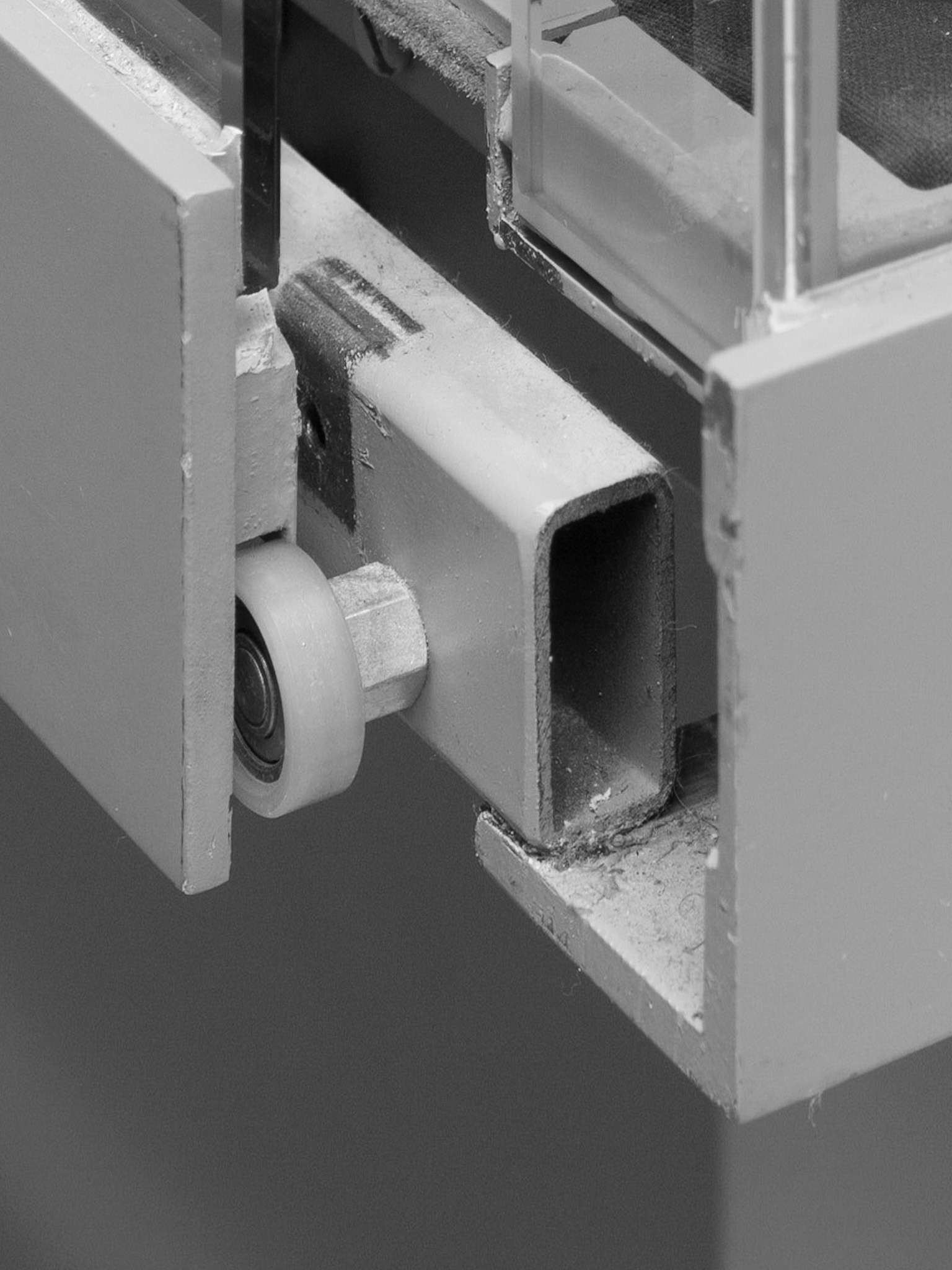
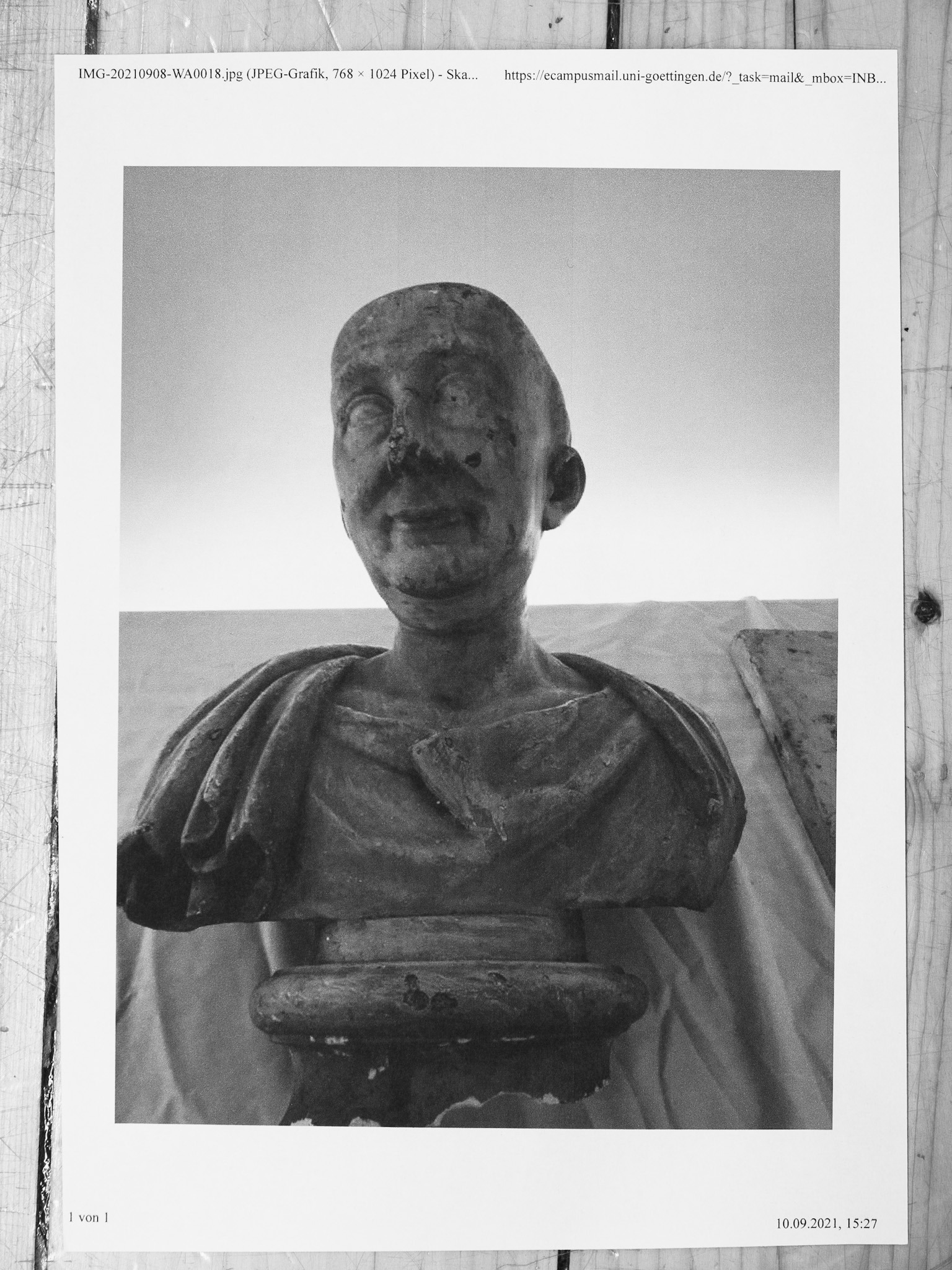
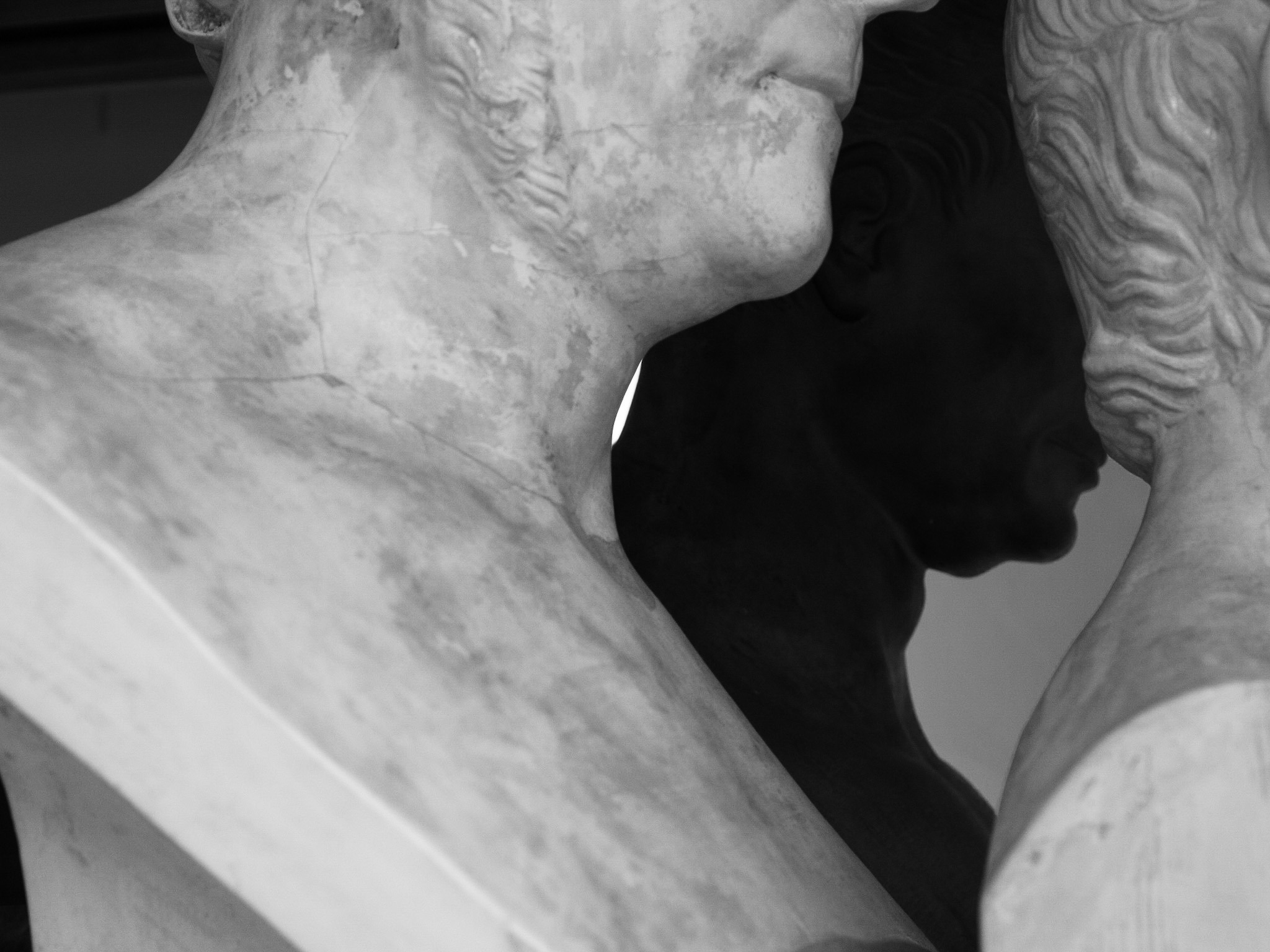
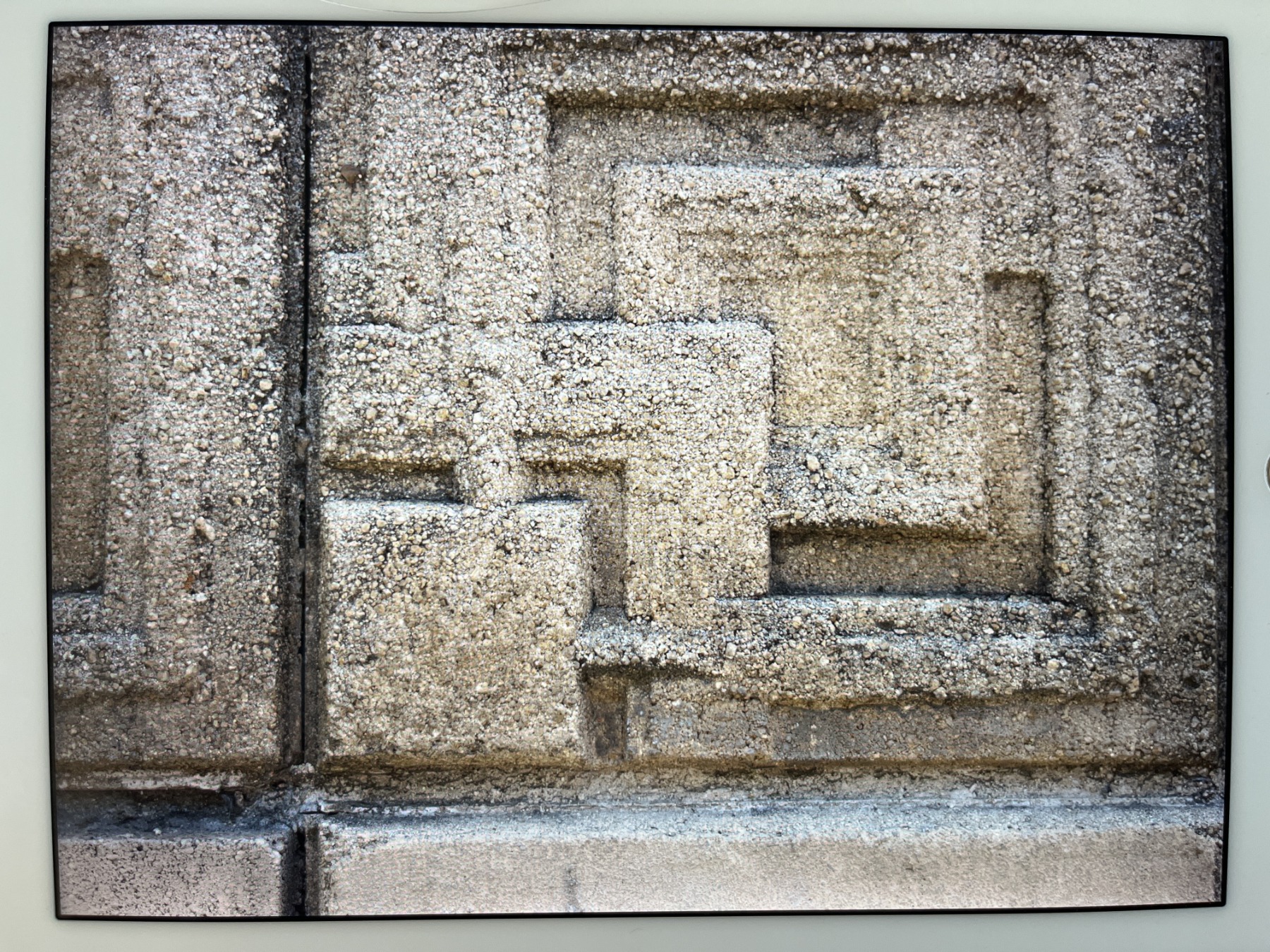
Michael Schmid, without title (Mathematisches Institut, Bunsenstraße) 2022/2026, inkjet print, 25×20 cm, VG Bildkunst Bonn | Courtesy of the artist


ABOUT THE ARTIST

Michael Schmid is an artist with an emphasis on photography. He trained at the Academy of Graphic Arts and Book Design under Prof. Beate Gütschow and at the University of the Arts Bremen under the teachers duo Prof. Korpys/Löffler. It was in this class that he obtained his diploma in 2013 and his master’s degree in 2014. Schmid’s reduced, focused photographs and objects are based on the forms and surfaces of objects – mostly familiar ones – from our everyday surroundings in Western societies. Through the conceptual use of a wide and innovative range of image-processing techniques, the artist reveals aspects of images and objects – and their everyday originals – that would otherwise easily have been overlooked. Through these often subtle and subversive shifts and clustering of our gaze, he not only opens up new ways of looking at the original objects and structures behind the images, but also clearly challenges the very notion of what an image is, or can be, within the exhibition space. Indeed, one might even derive the following question: How is our everyday reality actually constituted?

Michael Schmid’s work has been exhibited in numerous solo and group exhibitions, including at the Museum Weserburg in Bremen, the Michal Horbach Foundation in Cologne and his own gallery, K’in, in Bremen. His work has been supported by various grants and funding schemes, including the USA Project Grant (Senat für Kultur, Bremen, 2019), the DAAD scholarship for Los Angeles, USA (2018) and the catalogue grant from the Senator for Culture, Bremen (Ministerium für Wissenschaft und Kultur, Niedersachsen), 2016. Project grant, Waldemar Koch Foundation, Bremen. In 2015, he received the Bremer Förderpreis (Bremen Supporting Prize) from the Städtische Galerie, Bremen.
The artist was born in Langenau in 1981; he now lives and works in Berlin.

more informationen >> schmidmichael.com/


THE ANNUAL PROGRAMME

TRANSHUMAN (2026)
>POSTHUMAN (2027)

The Kunstverein Göttingen continues to follow the proven two-year biennial programme rhythm in order to enable the most in-depth examination possible of the programme’s overarching themes. After TERRA DIASPORA (2024–2025) explored contemporary phenomena, our current programme looks to the near and distant future.
The two-year programme TRANSHUMAN >POSTHUMAN (2026 > 2027) takes a critical look at the global transformation anticipated by some schools of thought: the transition from the anthropocentric humans of our time to the technically optimised transhumans of the near future and, even further into the future of our species, to posthumans. In short: the development of humanity from modern humanism to transhumanism to posthumanism.

The basic theme for the first year is TRANSHUMAN (2026) and includes four solo exhibitions and one group exhibition, bringing together artistic approaches and works to form a collection of perspectives and aspects of transhumanism. The formal and thematic basis of all exhibitions is the artistic exploration of the acceleration of technological development and capitalist growth, and the desired biotechnological optimisation of the human body and mind. The resulting social upheavals are already taking place in many ways in our present, with drastic consequences for coexistence within the span of a generation. These acute experiences flow into the visions of the approaching future and into the collective critical reflection of both the artists and our audience. With this in mind, a wide-ranging discourse and education programme is offered. We also aim to publish the annual programme again. The ideology of transhumanism should not be propagated uncritically, but rather deconstructed as critically as possible, collectively and on the basis of the works on display. We cordially invite all interested parties to join us.


We would like to thank our sponsors:  Universität Göttingen, Niedersächsisches Ministerium für Wissenschaft und Kultur, Stadt Göttingen, Sparkasse Göttingen And Landschaftsverband Südniedersachsen e.V.


 

Vernissage – Roy Köhnke

>>
INVITATION –

VERNISSAGE
Sa 30 May 5 – 8 pm

TRANSHUMAN N°2
Roy Köhnke
Being Flesh

The second exhibition of the year focuses on the human body, presenting it from astonishingly new perspectives. As the body lies at the centre of transhumanism – our theme for the year – the KVG team is particularly delighted to have found in Roy Köhnke a radical artist who fundamentally questions the relationship between the body and technology, both in the present and in the near future.

After a break of just under two months, we are now all the more delighted to be able to introduce you not only to the new art but also to the French artist himself at the opening. You are warmly invited and welcome.

Of course, there will be opening speeches at the start, at 5 pm, and chilled drinks will be provided. The entire exhibition takes place exclusively in summer daylight; heavy doors have been reinstalled, and the rest is best discovered for yourself – admission is free.

With best regards,
Your team at the Kunstverein Göttingen


Location
Altes Rathaus Göttingen (1st Floor)
Markt 9
37073 Göttingen


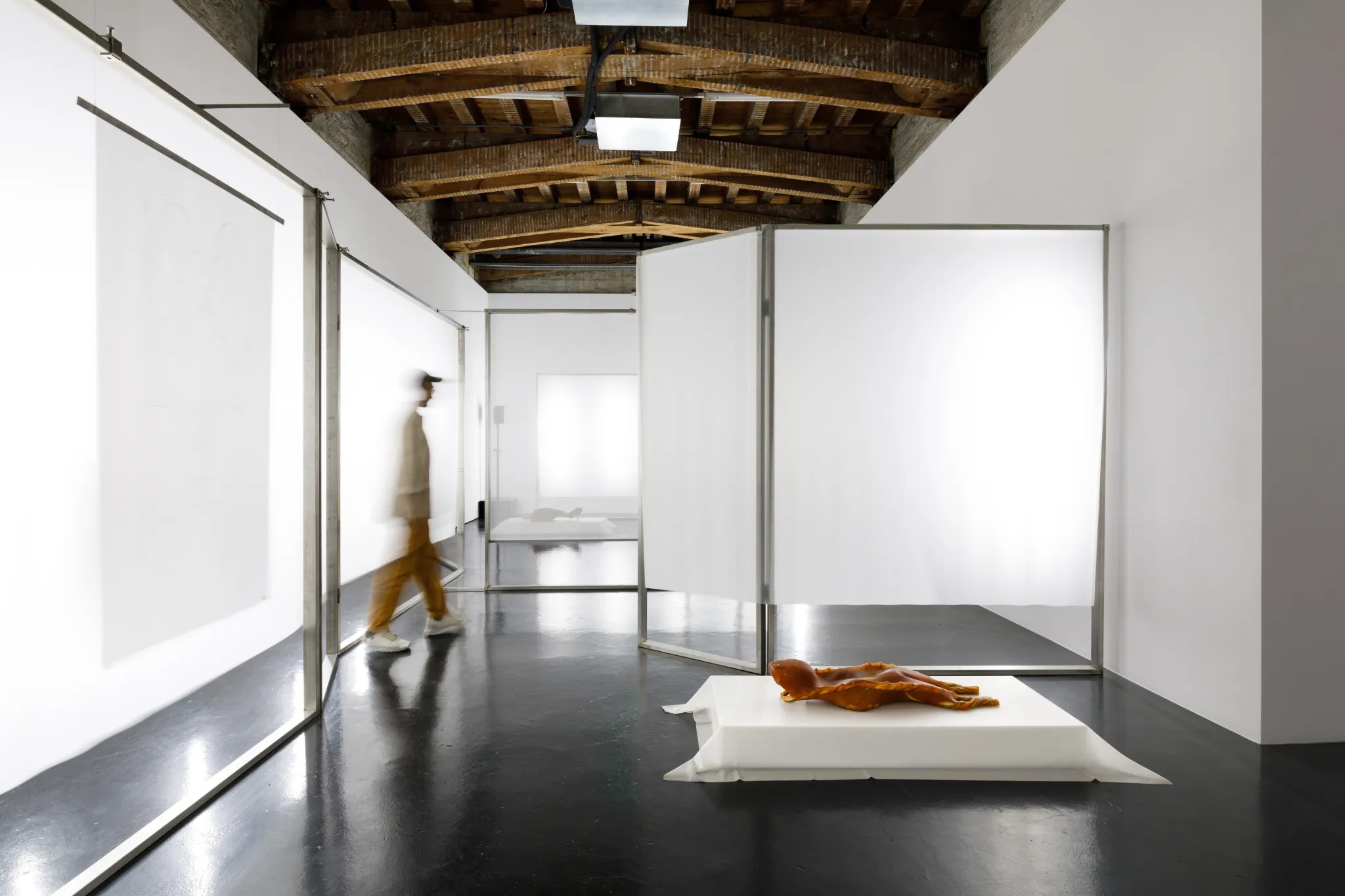
The French artist Roy Köhnke (*1990) is ideally suited to explore this contentious subject matter in Göttingen through sculptural-installative works from the field of contemporary sculpture. The eponymous work BEING FLESH, 2023, a multimedia installation that transforms the exhibition space into a kind of open body, is a good example of his approach: the installation consists of architecturally arranged membrane frames through which the audience passes. In the opening passageways, a series of biomorphic sculptures is brought to life by a sensory video created using scans of these sculptures taken with a magnetic resonance imaging (MRI) machine.


COMPLETE PROGRAMME

Sat 30 May from 5 pm
Vernissage
Welcome speeches and introduction to the exhibition
The artist and curator will be in attendance
Open until 8 pm, free admission

Sun 7 Jun / Sun 21 Jun / Sun 29 Jun
3 pm on each day
Sunday tour with Joos Ziegler

Sun 26 Jul 2026 2 pm – 7 pm
The Grand Finissage
Open until 7 pm (free admission) with
3 – 4 pm
Guided tour
“Walk and Talk” – through the exhibition with curator Stephan Klee in German and English
5 – 6 pm
Exhibition discussion
With Roy Köhnke, Stephan Klee and a special guest
6 pm
Closure


Duration
31 May – 26 Jul 2026
Opening times
Tue – Sun 11 am – 5 pm

Location
Altes Rathaus Göttingen (First Floor)
Markt 9
37073 Göttingen

Entrance Fee:
€ 3,00 / € 1,50 (reduced)
Free admission for guests under 18
Free admission with Kulturticket
Vernissagen and Finissagen are free of admission


Event images:
Roy Köhnke ‘Bugs series’ (detail), 2024, pigment print on aluminium | Part of the exhibition ‘It is Stronger than I Thought’, curated by Julien Arnaud, ADAGP | Photo: Salim Santa Lucia | Courtesy of the artist


ABOUT THE ARTIST

From sculptures and drawings to multimedia installations, Roy Köhnke’s work combines cutting-edge technology with basic craftsmanship. His project aims to overcome physical boundaries by reconnecting the body’s physical characteristics and narratives with its surroundings, whilst simultaneously treating the body as a distinct territory and narrative in its own right. By working with new technologies such as MRI or emotional AI, he explores alternatives to prevailing science fiction narratives in order to restore a body that has been fragmented and isolated by the dominance of science and Western culture. His often situational, transformative and collaborative installations are sites of interaction, much like a film set, where new types of biotechnological/queer organisms develop and assert their coexistence with vigour and vitality. His research focuses on techno-biological/co-evolutionary mechanisms, viewed through the broader prism of social justice, environmental justice and trans struggles.

more information  >> roykohnke.com/


THE ANNUAL PROGRAMME

TRANSHUMAN (2026)
>POSTHUMAN (2027)

The Kunstverein Göttingen continues to follow the proven two-year biennial programme rhythm in order to enable the most in-depth examination possible of the programme’s overarching themes. After TERRA DIASPORA (2024–2025) explored contemporary phenomena, our current programme looks to the near and distant future.
The two-year programme TRANSHUMAN >POSTHUMAN (2026 > 2027) takes a critical look at the global transformation anticipated by some schools of thought: the transition from the anthropocentric humans of our time to the technically optimised transhumans of the near future and, even further into the future of our species, to posthumans. In short: the development of humanity from modern humanism to transhumanism to posthumanism.

The basic theme for the first year is TRANSHUMAN (2026) and includes four solo exhibitions and one group exhibition, bringing together artistic approaches and works to form a collection of perspectives and aspects of transhumanism. The formal and thematic basis of all exhibitions is the artistic exploration of the acceleration of technological development and capitalist growth, and the desired biotechnological optimisation of the human body and mind. The resulting social upheavals are already taking place in many ways in our present, with drastic consequences for coexistence within the span of a generation. These acute experiences flow into the visions of the approaching future and into the collective critical reflection of both the artists and our audience. With this in mind, a wide-ranging discourse and education programme is offered. We also aim to publish the annual programme again. The ideology of transhumanism should not be propagated uncritically, but rather deconstructed as critically as possible, collectively and on the basis of the works on display. We cordially invite all interested parties to join us.


We would like to thank our sponsors: Niedersächsische Sparkassenstiftung, Niedersächsisches Ministerium für Wissenschaft und Kultur, Stadt Göttingen, Sparkasse Göttingen und Landschaftsverband Südniedersachsen e.V.


Exhibition – Roy Köhnke

TRANSHUMAN N°2
Roy Köhnke
Being Flesh

curated by Stephan Klee


Vernissage
Saturday 30 May at 5 pm
Open until 8 pm  (free admission)

Duration
31 May – 26 Jul 2026
Opening times
Tue – Sun 11 am – 5 pm

Location
Altes Rathaus Göttingen (First Floor)
Markt 9
37073 Göttingen

Entrance Fee:
€ 3,00 / € 1,50 (reduced)
Free admission for guests under 18
Free admission with Kulturticket
Vernissagen and Finissagen are free of admission


INTRODUCTION

“If we start transforming ourselves into something superior, what rights will these enhanced creatures claim, and what rights will they possess when compared to those left behind?” *

Transhumanism primarily aims to optimise, indeed to transcend, the human body as we currently understand it. Key technologies underpinning these aspirations include genetics, bioengineering, artificial intelligence, prosthetics and cryonics (the cryopreservation of bodies). Put positively, the human species is to be ‘empowered’: greater capacity, better senses, higher intelligence independent of location, no more disease and no more ageing. The idealised humanoids are consequently immortal ‘super-subjects’. Their future relationship to the current Homo sapiens remains (as yet) speculative. Whether for the transhuman developments that have long been taking place in our society, or for the ultimate vision of the “superhuman” that excites proponents of the pure doctrine, one thing remains evident: as the object of transhumanism, the human body is fundamentally at the centre; and is thus also central to our 2026 theme: TRANSHUMAN.

Whilst many people welcome scientific, medical and technological progress as opportunities for their bodies, consciously embracing it and actively integrating it into their everyday lives, a newly radicalised transhumanism is degenerating into a powerful ideology on the basis of which economic and political elites strive for physical superiority, boundless wealth and power. Further accelerated by exponentially growing investment capital – the so-called “techno-capital machine” ** – a cut-throat competition for the ‘most optimised’ body is taking hold, which could not only give rise to a techno-enabled elite, but is also gradually and forcibly eroding the free choice of medical-technological enhancement in relation to one’s own body. Bodies would thus become vital demolition zones for the human right to the self-determined integrity of one’s own body.

Against this backdrop, the KVG has chosen to present as the second solo exhibition of the year Roy Köhnke’s Being Flesh, featuring an artist who, whilst primarily exploring the multifaceted relationship between technology and the body, resolutely rejects the emerging techno-capitalist transhumanism as fascistic. Rather, his work explicitly challenges current scientific understanding and social paradigms of the human body by posing fundamental questions: What conception of the human body is actually held in today’s society, and how are bodies treated accordingly?

From groundbreaking studies of proportion, including those by Michelangelo Buonarroti and Leonardo da Vinci (e.g. the ‘Vitruvian Man’), through fundamental scientific works on anatomy, such as Andreas Vesalius’s ‘De Humani Corporis Fabrica Libri Septem’, right through to the imaging techniques of modern medicine (X-ray, CT, ultrasound, MRI and nuclear medicine), society’s understanding of the nature and potential of the body has undergone a profound transformation from the Renaissance to the present-day postmodern era. The opaque, fleshy image of God became the vitreous human, and as a perfectly lubricated cellular machine, was seemingly demystified once and for all. This also paved the way for the modern availability of the organism.

How this functionally oriented doctrine about the matter and potential of the body shapes both – our self-image as organic-mechanical beings and the future of our species – Roy Köhnke explores in his works–series. His predominantly drawing- and sculpture-based approach incorporates, amongst other things, medical imaging techniques and draws on our fascination with the comprehensive analysis of our cellular constitution. At the same time, a sense of alienation grows in the face of the medical and mechanical deconstruction of that entity, which we still primarily perceive as a self-determined safe space of flesh, technology and thought: our individual body. For living in an era of accelerated transhumanism could also mean allowing the familiar shelter of one’s own body to be repeatedly transformed by external forces, or rather be deformed? A visit to the installations by the French artist Roy Köhnke in the Old Town Hall may thus also prove to be a reflection — grounded in intense impressions — on our very own sensation of the body in the present day and the near future.

* Francis Fukuyama “Transhumanism” Source Foreign Policy, No. 144 (Sep. – Oct., 2004), pp. 42 – 43

** Nick Land in Essay “Melt Down”, 1995, in: “Fanged Noumena: Collected Writings 1987–2007”, (Urbanomic / Sequence Press, published by MIT Press


PROGRAMME

Sat 30 May from 5 pm
Vernissage
Welcome speeches and introduction to the exhibition
The artist and curator will be in attendance
Open until 8 pm, free admission

Sun 7 Jun / Sun 21 Jun / Sun 29 Jun
3 pm on each day
Sunday tour with Joos Ziegler

Sun 26 Jul 2026 2 pm – 7 pm
The Grand Finissage
Open until 7 pm (free admission) with
3 – 4 pm
Guided tour
“Walk and Talk” – through the exhibition with curator Stephan Klee in German and English
5 – 6 pm
Exhibition discussion
With Roy Köhnke, Stephan Klee and a special guest
6 pm
Closure


Event images:
Roy Köhnke ‘Bugs series’ (detail), 2024, pigment print on aluminium | Part of the exhibition ‘It is Stronger than I Thought’, curated by Julien Arnaud, ADAGP | Photo: Salim Santa Lucia | Courtesy of the artist


ABOUT THE ARTIST

From sculptures and drawings to multimedia installations, Roy Köhnke’s work combines cutting-edge technology with basic craftsmanship. His project aims to overcome physical boundaries by reconnecting the body’s physical characteristics and narratives with its surroundings, whilst simultaneously treating the body as a distinct territory and narrative in its own right. By working with new technologies such as MRI or emotional AI, he explores alternatives to prevailing science fiction narratives in order to restore a body that has been fragmented and isolated by the dominance of science and Western culture. His often situational, transformative and collaborative installations are sites of interaction, much like a film set, where new types of biotechnological/queer organisms develop and assert their coexistence with vigour and vitality. His research focuses on techno-biological/co-evolutionary mechanisms, viewed through the broader prism of social justice, environmental justice and trans struggles.

more information >> roykohnke.com/


THE ANNUAL PROGRAMME

TRANSHUMAN (2026)
>POSTHUMAN (2027)

The Kunstverein Göttingen continues to follow the proven two-year biennial programme rhythm in order to enable the most in-depth examination possible of the programme’s overarching themes. After TERRA DIASPORA (2024–2025) explored contemporary phenomena, our current programme looks to the near and distant future.
The two-year programme TRANSHUMAN >POSTHUMAN (2026 > 2027) takes a critical look at the global transformation anticipated by some schools of thought: the transition from the anthropocentric humans of our time to the technically optimised transhumans of the near future and, even further into the future of our species, to posthumans. In short: the development of humanity from modern humanism to transhumanism to posthumanism.

The basic theme for the first year is TRANSHUMAN (2026) and includes four solo exhibitions and one group exhibition, bringing together artistic approaches and works to form a collection of perspectives and aspects of transhumanism. The formal and thematic basis of all exhibitions is the artistic exploration of the acceleration of technological development and capitalist growth, and the desired biotechnological optimisation of the human body and mind. The resulting social upheavals are already taking place in many ways in our present, with drastic consequences for coexistence within the span of a generation. These acute experiences flow into the visions of the approaching future and into the collective critical reflection of both the artists and our audience. With this in mind, a wide-ranging discourse and education programme is offered. We also aim to publish the annual programme again. The ideology of transhumanism should not be propagated uncritically, but rather deconstructed as critically as possible, collectively and on the basis of the works on display. We cordially invite all interested parties to join us.


We would like to thank our sponsors: Niedersächsische Sparkassenstiftung, Niedersächsisches Ministerium für Wissenschaft und Kultur, Stadt Göttingen, Sparkasse Göttingen und Landschaftsverband Südniedersachsen e.V.


Finissage – Mit Borrás

INVITATION
FINISSAGE
Sun 12 Apr 3 – 5 pm

TRANSHUMAN N°1
Mit Borrás
NATORU ナとル

The final week of Mit Borrás’s vibrant exhibition NATORU ナとル has begun, and it will conclude with a closing event on Sunday, 12 April 2026, from 3 pm to 5 pm. If you haven’t yet had the chance to visit, we would like to take this opportunity to warmly invite you to come and see the exhibition.
We also recommend attending the closing event, which will include a drinks reception. At 3 pm, Artistic Director Stephan Klee will lead a guided tour of the exhibition for those interested. Several large-scale video installations featuring intertwining soundscapes are complemented by expansive installations and minimalist object assemblages. The works will be presented and discussed in a ‘walk and talk’ format, whilst at the same time offering all participants the opportunity for active discourse on the deeper themes behind the artworks. We look forward to seeing you there.

Location

Künstlerhaus Göttingen (1. OG)
Gotmarstraße 1
37073 Göttingen – Gemany


ONGOING PROGRAMME

Sun, 12 Apr, 3–5 p.m.
Finissage
3 pm
Guided tour and discussion – ‘Walk and Talk’
through the exhibition with curator Stephan Klee in German and English
4 pm
Closure


“The core of the exhibition title ‘nato’ comes from Latin and has multiple meanings: e.g. ‘to be born’ or the first-person form of ‘to swim,’ ‘to surge,’ ‘to billow’ and ‘to sway’, or even just ‘the children.’ In Spanish, “nato” simply means ‘born.’ The Japanese syllable ‘Ru’ rounds off the title and not only refers to the Japanese inspiration in the exhibition, but also underlines the active character of the title, as “Ru” often finalises verbs in Japanese. “NATURO” could be loosely translated as ‘continuous creation’, for example.
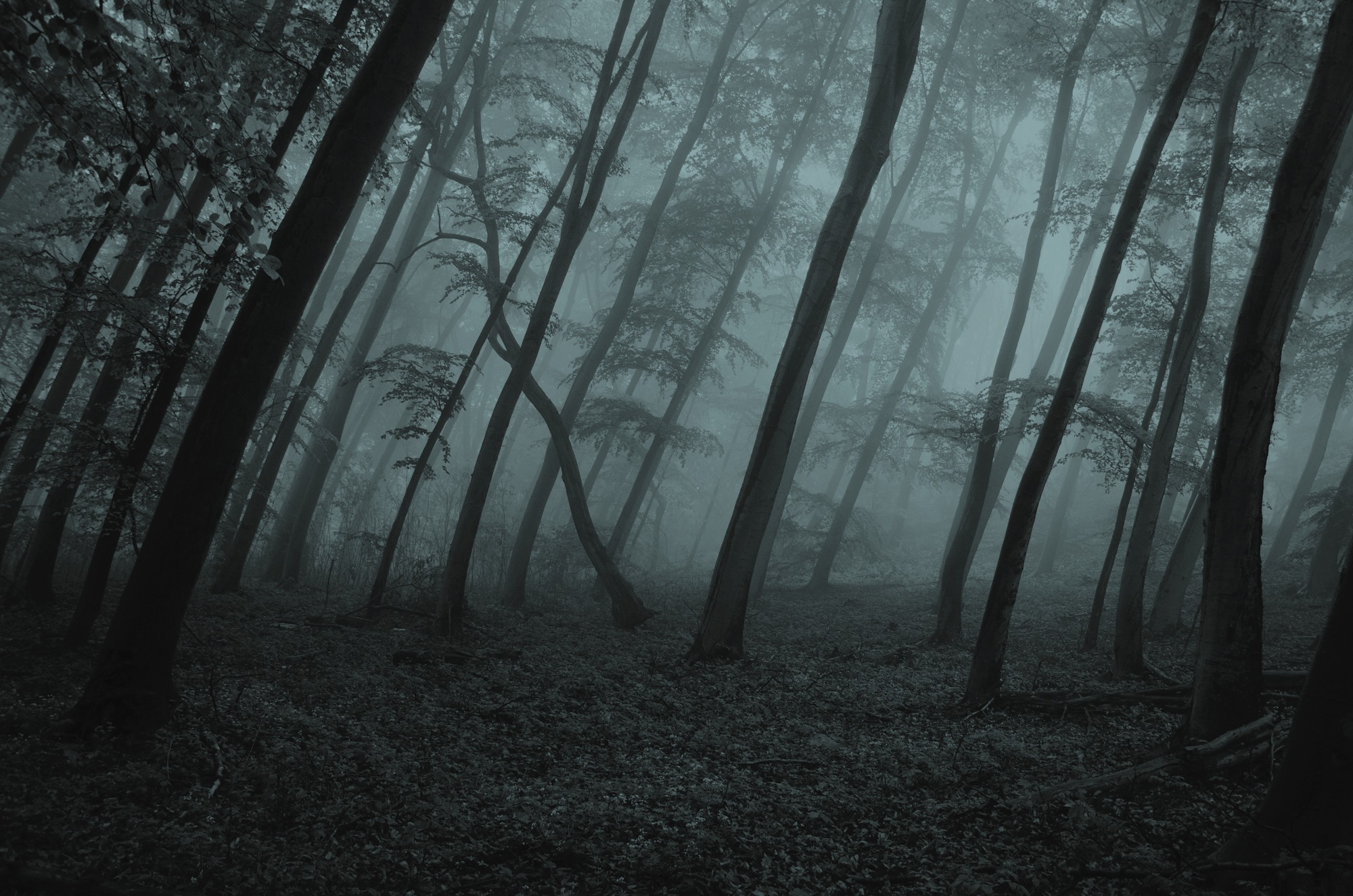
This meaning and connection between Western and Far Eastern culture in the title is no coincidence, but underlines the deeper concept of the exhibition. Inspired by the mystical Aokigahara forest in Japan, Mit Borrás creates an environment for the birth and presence of future creatures in the Künstlerhaus. To this end, he combines the directive power of prophecies in the video L.Y.R.A.- The Oracle (2025) with the essential significance of the forest for human existence in the central projection HANABA 突变花 (ADAPTASI CYCLE 2022). And finally, the artist is already breathing life into a new species; the presence of this breathing sculpture permeates the spaces.”


event images:
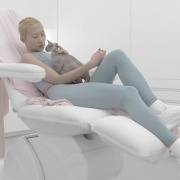
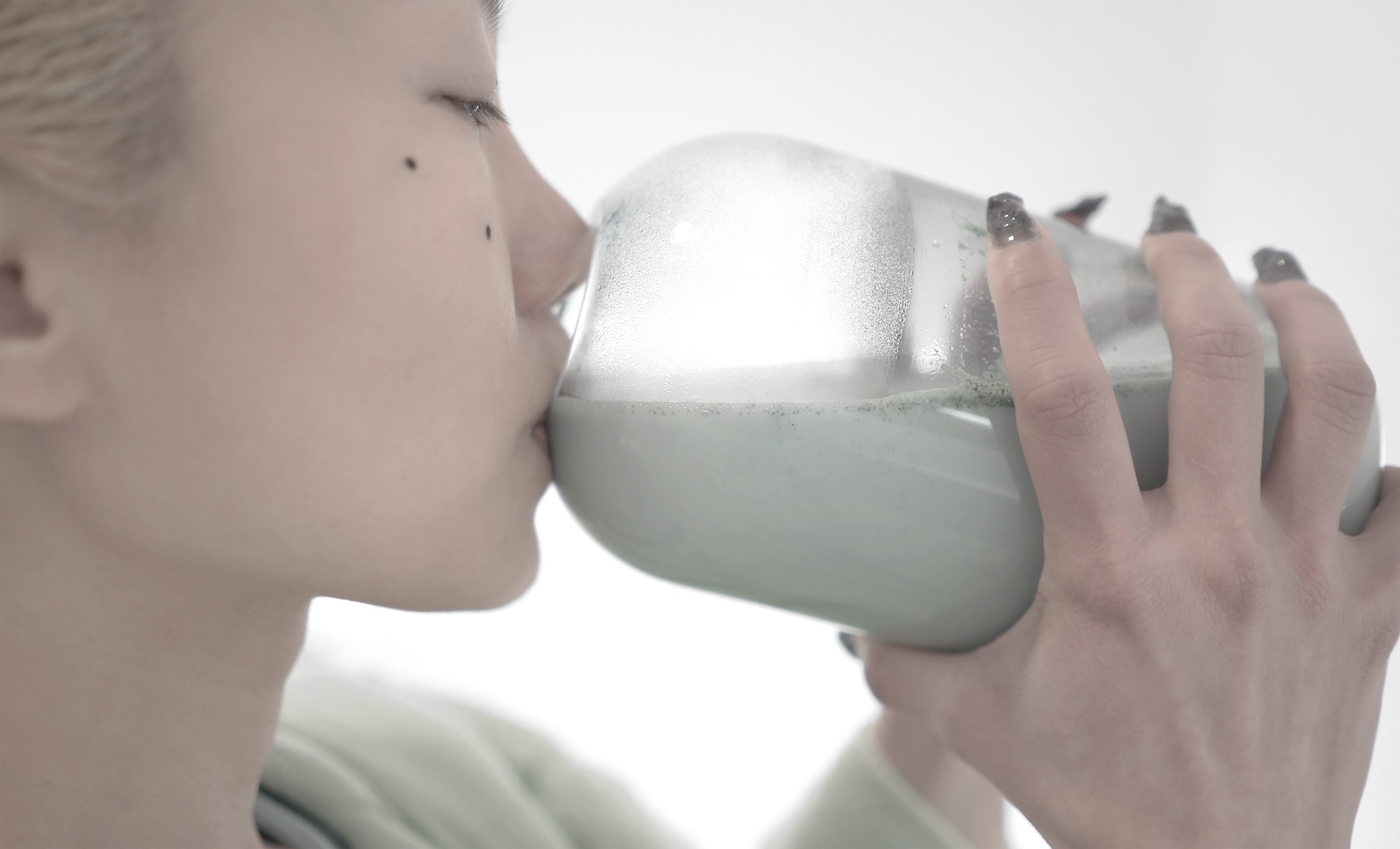
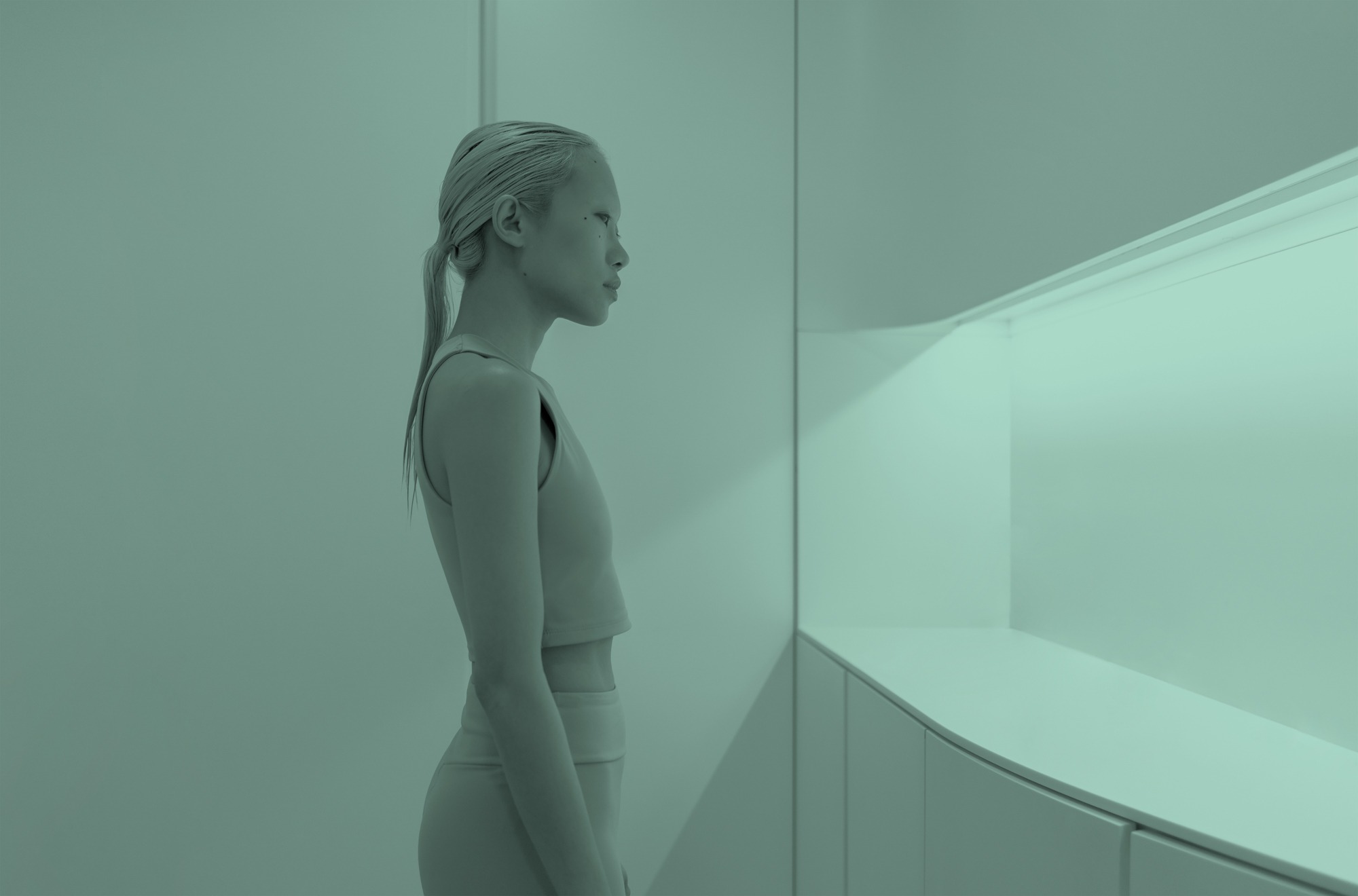
Mit Borrás Hanaba. Adaptasi Cycle. Film. Installation | Performance. Work by Mit Borrás. Art Director Rachel Lamot, Music Daniel Vacas Peralta. With Weixin Quek Chong, Written by Mit Borrás & Rachel Lamot, Fashion Design Kim Rosario, Fashion Design Path by Janine Grosche, Drone Liu Zhang, Drone Field, Jesús Moreno, Clinical Department Gómez Bravo, Dental department Dentix, Relevium, Make Up Andréa Méndez, Eloy Noguera Atienza, Production Design Cavve. Images courtesy of the artist, 2023


ABOUT THE ARTIST

Mit Borrás (b. 1982, Madrid) is a Spanish visual artist based between Madrid and Berlin, recognized for his pioneering work and groundbreaking contributions to contemporary visual arts, videoart, media installation and digital art with performance. His transdisciplinary practice delves into the complex interplay between humanity, nature, and technology, frequently exploring themes such as adaptation, post-humanism, bioethics, and digital sensuality through immersive video installations, performances, and multimedia works. Borrás’s art is distinguished by its ability to merge the ancient with the futuristic, forging speculative mythologies that reflect profound societal transformations.

The central body of work Adaptasi, explores the artist’s personal worldview in his more recent oeuvre. Over the years, art director Rachel Lamot and many other contributors have created a multimedia cycle consisting of the following six parts: PHANTOM LIMB (ADAPTASI CYCLE 2021), HEAVVEN (ADAPTASI CYCLE 2021), EUPHORIA (ADAPTASI CYCLE 2022), HANABA 突变花 (ADAPTASI CYCLE 2022), YOKAI スワミ (ADAPTASI CYCLE 2022), HERMES (ADAPTASI CYCLE 2025). The title ‘Adaptasi’ refers to the ability to adapt, to adjust. With HANABA 突变花 as its central work, the Adaptasi cycle is also strongly represented in Göttingen, albeit as the basis for an independent artistic narrative strand.

more information >>https://mitborras.com


THE ANNUAL PROGRAMME

TRANSHUMAN (2026)
>POSTHUMAN (2027)

The Kunstverein Göttingen continues to follow the proven two-year biennial programme rhythm in order to enable the most in-depth examination possible of the programme’s overarching themes. After TERRA DIASPORA (2024–2025) explored contemporary phenomena, our current programme looks to the near and distant future.
The two-year programme TRANSHUMAN >POSTHUMAN (2026 > 2027) takes a critical look at the global transformation anticipated by some schools of thought: the transition from the anthropocentric humans of our time to the technically optimised transhumans of the near future and, even further into the future of our species, to posthumans. In short: the development of humanity from modern humanism to transhumanism to posthumanism.

The basic theme for the first year is TRANSHUMAN (2026) and includes four solo exhibitions and one group exhibition, bringing together artistic approaches and works to form a collection of perspectives and aspects of transhumanism. The formal and thematic basis of all exhibitions is the artistic exploration of the acceleration of technological development and capitalist growth, and the desired biotechnological optimisation of the human body and mind. The resulting social upheavals are already taking place in many ways in our present, with drastic consequences for coexistence within the span of a generation. These acute experiences flow into the visions of the approaching future and into the collective critical reflection of both the artists and our audience. With this in mind, a wide-ranging discourse and education programme is offered. We also aim to publish the annual programme again. The ideology of transhumanism should not be propagated uncritically, but rather deconstructed as critically as possible, collectively and on the basis of the works on display. We cordially invite all interested parties to join us.


We would like to thank our sponsors: Niedersächsisches Ministerium für Wissenschaft und Kultur, Stadt Göttingen, Sparkasse Göttingen und Landschaftsverband Südniedersachsen e.V.


Vernissage – Mit Borrás

VERNISSAGE –
INVITATION
Sat 28 Feb 5 – 8 pm

TRANSHUMAN N°1
Mit Borrás
NATORU ナとル

Shortly after the snow melts, the Kunstverein Göttingen heralds the start of the new exhibition year and warmly welcomes you. Spanish artist Mit Borrás kicks off the season with the colourful exhibition NATORU ナとル.

Expansive installations and minimalist object assemblages complement several large video installations with intertwining soundscapes. We invite you to come and see for yourself, listen to the opening and introductory speeches, take a short tour of the transformed rooms with curator Stephan Klee, and join us in toasting the start of the artistic year. The artist will be present.


Location

Künstlerhaus Göttingen (1st Floor)
Gotmarstraße 1
37073 Göttingen – Germany


FURTHER PROGRAMME

Sun 8 Mar / Sun 15 Mar / Sun 29 Mar
at 3 pm each day
Sunday Guided Tour with Joos Ziegler

Sun, 12 Apr, 3–5 p.m.
Finissage
3 pm
Guided tour and discussion – ‘Walk and Talk’
through the exhibition with curator Stephan Klee in German and English
4 pm
Closure


” The core of the exhibition title ‘nato’ comes from Latin and has multiple meanings: e.g. ‘to be born’ or the first-person form of ‘to swim,’ ‘to surge,’ ‘to billow’ and ‘to sway’, or even just ‘the children.’ In Spanish, “nato” simply means ‘born.’ The Japanese syllable ‘Ru’ rounds off the title and not only refers to the Japanese inspiration in the exhibition, but also underlines the active character of the title, as “Ru” often finalises verbs in Japanese. NATURO could be loosely translated as ‘continuous creation’, for example.
This meaning and connection between Western and Far Eastern culture in the title is no coincidence, but underlines the deeper concept of the exhibition. Inspired by the mystical Aokigahara forest in Japan, Mit Borrás creates an environment for the birth and presence of future creatures in the Künstlerhaus. To this end, he combines the directive power of prophecies in the video L.Y.R.A.- The Oracle (2025) with the essential significance of the forest for human existence in the central projection HANABA 突变花 (ADAPTASI CYCLE 2022). And finally, the artist is already breathing life into a new species; the presence of this breathing sculpture permeates the spaces. ”


Event Images:
Mit Borrás. Hanaba. Aadaptasi Cycle. Film. Installation | Performance. Work by MIt Borrás. Art Director Rachel Lamot, Music Daniel Vacas Peralta. With Weixin Quek Chong, Written by Mit Borrás & Rachel Lamot, Fashion Design Kim Rosario, Fashion Design Path by Janine Grosche, Drone Liu Zhang, Drone Field, Jesús Moreno, Clinical Department Gómez Bravo, Dental department Dentix, Relevium, Make Up Andréa Méndez, Eloy Noguera Atienza, Production Design Cavve. Images courtesy of the artist, 2023


ABOUT THE ARTIST
Mit Borrás
(b. 1982, Madrid) is a Spanish visual artist based between Madrid and Berlin, recognized for his pioneering work and groundbreaking contributions to contemporary visual arts, videoart, media installation and digital art with performance. His transdisciplinary practice delves into the complex interplay between humanity, nature, and technology, frequently exploring themes such as adaptation, post-humanism, bioethics, and digital sensuality through immersive video installations, performances, and multimedia works. Borrás’s art is distinguished by its ability to merge the ancient with the futuristic, forging speculative mythologies that reflect profound societal transformations.

The central body of work Adaptasi, explores the artist’s personal worldview in his more recent oeuvre. Over the years, art director Rachel Lamot and many other contributors have created a multimedia cycle consisting of the following six parts: PHANTOM LIMB (ADAPTASI CYCLE 2021), HEAVVEN (ADAPTASI CYCLE 2021), EUPHORIA (ADAPTASI CYCLE 2022), HANABA 突变花 (ADAPTASI CYCLE 2022), YOKAI スワミ (ADAPTASI CYCLE 2022), HERMES (ADAPTASI CYCLE 2025). The title ‘Adaptasi’ refers to the ability to adapt, to adjust. With HANABA 突变花 as its central work, the Adaptasi cycle is also strongly represented in Göttingen, albeit as the basis for an independent artistic narrative strand.

more information >>https://mitborras.com


THE ANNUAL PROGRAMME

TRANSHUMAN (2026)
>POSTHUMAN (2027)

The Kunstverein Göttingen continues to follow the proven two-year biennial programme rhythm in order to enable the most in-depth examination possible of the programme’s overarching themes. After TERRA DIASPORA (2024–2025) explored contemporary phenomena, our current programme looks to the near and distant future.
The two-year programme TRANSHUMAN >POSTHUMAN (2026 > 2027) takes a critical look at the global transformation anticipated by some schools of thought: the transition from the anthropocentric humans of our time to the technically optimised transhumans of the near future and, even further into the future of our species, to posthumans. In short: the development of humanity from modern humanism to transhumanism to posthumanism.

The basic theme for the first year is TRANSHUMAN (2026) and includes four solo exhibitions and one group exhibition, bringing together artistic approaches and works to form a collection of perspectives and aspects of transhumanism. The formal and thematic basis of all exhibitions is the artistic exploration of the acceleration of technological development and capitalist growth, and the desired biotechnological optimisation of the human body and mind. The resulting social upheavals are already taking place in many ways in our present, with drastic consequences for coexistence within the span of a generation. These acute experiences flow into the visions of the approaching future and into the collective critical reflection of both the artists and our audience. With this in mind, a wide-ranging discourse and education programme is offered. We also aim to publish the annual programme again. The ideology of transhumanism should not be propagated uncritically, but rather deconstructed as critically as possible, collectively and on the basis of the works on display. We cordially invite all interested parties to join us.


We would like to thank our sponsors: Niedersächsisches Ministerium für Wissenschaft und Kultur, Stadt Göttingen, Sparkasse Göttingen und Landschaftsverband Südniedersachsen e.V.


Exhibition – Mit Borrás

TRANSHUMAN N°1
Mit Borrás
NATORU ナとル

curated by Stephan Klee

Vernissage
Saturday, 28 Feb 5 – 8 pm

Duration
1 Mar – 12 Apr 2026
Tue – Fri 2 – 6 pm
Sat – Sun 11 am – 5 pm

Location
Künstlerhaus Göttingen (1st floor)
Gotmarstraße 1
37073 Göttingen– Germany

INTRODUCTION
Is the creation of a near-perfect universal utopia, in which nature, technology and human existence have finally found a balanced and flourishing coexistence, also one of the achievements of contemporary art? At the start of the year, the Kunstverein Göttingen gives a clearly positive answer to this question and, in doing so, provides some valid arguments for not viewing transhumanist developments with scepticism alone.
The first solo exhibition of the new year’s programme, 2026 TRANSHUMAN, is organised by Spanish artist Mit Borrás and is entitled NATORU ナとル. In a conceptual interplay of different media, the Madrid-based artist paints a visually stunning, immersive vision of how great the future could be. Admittedly, this is a rather rare approach in our sceptical times, but precisely for this reason, it is perhaps a liberating concept and a good introduction to the topic of transhuman tendencies.

With a strong focus on new technologies such as computer renderings and digital filters, 3D printing, animated videos and drone camera flights in his expressive media, Mit Borrás has been working systematically for years on elaborate video productions, always appropriately fused with immersive spatial settings in a striking design with high recognition value. For these elaborate works, he runs the production company CAVVE in Madrid together with his art director and partner Rachel Lamot. As a congenial duo, they maintain very fruitful connections to the performance and video art scene, but also to related scientific disciplines such as philosophy, the biosciences and cybernetics.
The artist is strongly inspired by the post-structural dispositives of cyberfeminism, post-naturalism and transhumanism, which open his eyes to the possibilities of technology and species hybridity. At the same time, he also places himself firmly in the traditions of animism, shamanism, spiritualism and mysticism, some of which date back thousands of years, which stems from and further nourishes his deep connection to nature. Significantly influenced by the theories of Donna Haraway, Bruno Latour, Mark Fischer and Gilles Deleuze, Mit Borrás follows a cyclical, fluid, post-patriarchal and ecological worldview, which is also strongly reflected in his works. These are mostly characterised by a seductively fertile, effective and sometimes meditative fusion of technology, nature and humanity, which has defined all his recent work since 2017.

The core of the exhibition title ‘nato’ comes from Latin and has multiple meanings: e.g. ‘to be born’ or the first-person form of ‘to swim,’ ‘to surge,’ ‘to billow’ and ‘to sway’, or even just ‘the children.’ In Spanish, “nato” simply means ‘born.’ The Japanese syllable ‘Ru’ rounds off the title and not only refers to the Japanese inspiration in the exhibition, but also underlines the active character of the title, as “Ru” often finalises verbs in Japanese. “NATURO” could be loosely translated as ‘continuous creation’, for example.
This meaning and connection between Western and Far Eastern culture in the title is no coincidence, but underlines the deeper concept of the exhibition. Inspired by the mystical Aokigahara forest in Japan, Mit Borrás creates an environment for the birth and presence of future creatures in the Künstlerhaus. To this end, he combines the directive power of prophecies in the video L.Y.R.A.- The Oracle (2025) with the essential significance of the forest for human existence in the central projection HANABA 突变花 (ADAPTASI CYCLE 2022). And finally, the artist is already breathing life into a new species; the presence of this breathing sculpture permeates the spaces.
This interconnection of works in the exhibition space highlights variations in the exchange of impulses, information and materials. Staging the boundaries of species and transcending the boundaries of animate and inanimate matter, these diverse variations explore new forms of cooperation and cohabitation. The potentials on display reinforce the hope that mutual adaptation, proactive forms of empathy and cross-species fusions, combined with new technologies, could lead to a sustainable future for all. Providing a forum for this affirmative version of progress was not only necessary for artistic quality but also to balance the desired discursive exchange with a positive prognosis.


PROGRAMME
Sat, 28 Feb 5 – 8 pm
Vernissage
Welcome speeches and introduction to the exhibition
by curator Stephan Klee

Sun 8 Mar / Sun 15 Mar / Sun 29 Mar
at 3 pm each day
Sunday Guided Tour with Joos Ziegler

Sun, 12 Apr, 3–5 p.m.
Finissage
3 pm
Guided tour and discussion – ‘Walk and Talk’
through the exhibition with curator Stephan Klee in German and English
4 pm
Closure


Event Images:
Mit Borrás. Hanaba. Aadaptasi Cycle. Film. Installation | Performance. Work by MIt Borrás. Art Director Rachel Lamot, Music Daniel Vacas Peralta. With Weixin Quek Chong, Written by Mit Borrás & Rachel Lamot, Fashion Design Kim Rosario, Fashion Design Path by Janine Grosche, Drone Liu Zhang, Drone Field, Jesús Moreno, Clinical Department Gómez Bravo, Dental department Dentix, Relevium, Make Up Andréa Méndez, Eloy Noguera Atienza, Production Design Cavve. Images courtesy of the artist, 2023


ABOUT THE ARTIST
Mit Borrás
(b. 1982, Madrid) is a Spanish visual artist based between Madrid and Berlin, recognized for his pioneering work and groundbreaking contributions to contemporary visual arts, videoart, media installation and digital art with performance. His transdisciplinary practice delves into the complex interplay between humanity, nature, and technology, frequently exploring themes such as adaptation, post-humanism, bioethics, and digital sensuality through immersive video installations, performances, and multimedia works. Borrás’s art is distinguished by its ability to merge the ancient with the futuristic, forging speculative mythologies that reflect profound societal transformations.

The central body of work Adaptasi, explores the artist’s personal worldview in his more recent oeuvre. Over the years, art director Rachel Lamot and many other contributors have created a multimedia cycle consisting of the following six parts: PHANTOM LIMB (ADAPTASI CYCLE 2021), HEAVVEN (ADAPTASI CYCLE 2021), EUPHORIA (ADAPTASI CYCLE 2022), HANABA 突变花 (ADAPTASI CYCLE 2022), YOKAI スワミ (ADAPTASI CYCLE 2022), HERMES (ADAPTASI CYCLE 2025). The title ‘Adaptasi’ refers to the ability to adapt, to adjust. With HANABA 突变花 as its central work, the Adaptasi cycle is also strongly represented in Göttingen, albeit as the basis for an independent artistic narrative strand.

more information >>https://mitborras.com


THE ANNUAL PROGRAMME

TRANSHUMAN (2026)
>POSTHUMAN (2027)

The Kunstverein Göttingen continues to follow the proven two-year biennial programme rhythm in order to enable the most in-depth examination possible of the programme’s overarching themes. After TERRA DIASPORA (2024–2025) explored contemporary phenomena, our current programme looks to the near and distant future.
The two-year programme TRANSHUMAN >POSTHUMAN (2026 > 2027) takes a critical look at the global transformation anticipated by some schools of thought: the transition from the anthropocentric humans of our time to the technically optimised transhumans of the near future and, even further into the future of our species, to posthumans. In short: the development of humanity from modern humanism to transhumanism to posthumanism.

The basic theme for the first year is TRANSHUMAN (2026) and includes four solo exhibitions and one group exhibition, bringing together artistic approaches and works to form a collection of perspectives and aspects of transhumanism. The formal and thematic basis of all exhibitions is the artistic exploration of the acceleration of technological development and capitalist growth, and the desired biotechnological optimisation of the human body and mind. The resulting social upheavals are already taking place in many ways in our present, with drastic consequences for coexistence within the span of a generation. These acute experiences flow into the visions of the approaching future and into the collective critical reflection of both the artists and our audience. With this in mind, a wide-ranging discourse and education programme is offered. We also aim to publish the annual programme again. The ideology of transhumanism should not be propagated uncritically, but rather deconstructed as critically as possible, collectively and on the basis of the works on display. We cordially invite all interested parties to join us.


We would like to thank our sponsors: Niedersächsisches Ministerium für Wissenschaft und Kultur, Stadt Göttingen, Sparkasse Göttingen und Landschaftsverband Südniedersachsen e.V.